What is OpenADR?
Open Automated Demand ResponseReviewed

OpenADR (Open Automated Demand Response) is an open standard for sending demand response signals, such as events, prices and load targets, from a utility or grid operator to customer sites and aggregators, and for collecting reports back. It lets a building, charging site or battery react to a grid event automatically, without someone on site taking a phone call. It is maintained by the OpenADR Alliance.
- Maintained byOpenADR Alliance
- Versions2.0a, 2.0b, 3.0
- InternationalIEC 62746-10-1 (from 2.0b)
- RolesVTN (server), VEN (client)
01
What OpenADR does
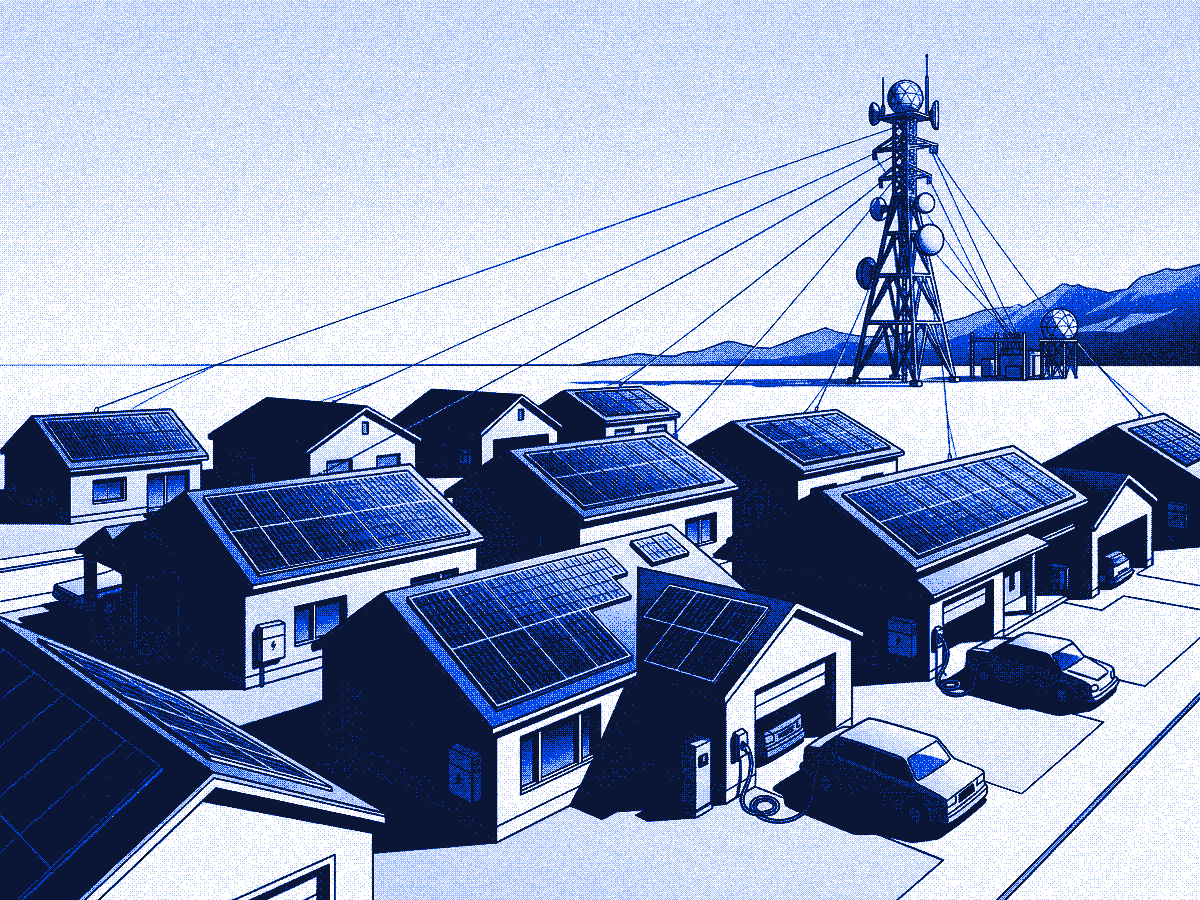
OpenADR carries the messages behind a demand response program. The utility’s server announces an event, for example a request to reduce load by a target amount between 4 and 7 pm tomorrow, or a price schedule for the day. Each enrolled site or aggregator receives it, decides how to respond and reports its load during the event.
Because the signals are standard, the same customer equipment can join programs from different utilities, and the same utility can work with many equipment vendors.
Key functions
- Event notifications with start, duration and targets
- Price and tariff signals
- Opt in and opt out by the customer
- Telemetry and baseline reports
- Registration of sites and resources
- Push or poll delivery
02
Why OpenADR matters
Demand response only works at scale if it is automatic. OpenADR removed the manual step: a building or fleet can be enrolled once and then respond to every event in software, which makes smaller sites worth enrolling.
Many utility and market programs in North America, and some in Europe and Asia, specify OpenADR, and California’s Title 24 building code has required demand-responsive controls able to receive OpenADR signals in some new commercial buildings.
03
How OpenADR works
There are two roles. A Virtual Top Node (VTN) is the server, run by a utility, grid operator or aggregator. A Virtual End Node (VEN) is the client, running on a site gateway, a building controller or an aggregator’s platform. VTNs can be chained: an aggregator is a VEN to the utility and a VTN to its own sites.
OpenADR 2.0 exchanges XML messages over HTTP, by polling or push, or over XMPP; 2.0a is a simple profile for devices and 2.0b adds reporting and richer events. OpenADR 3.0, released in 2023, replaces this with a REST and JSON API described in OpenAPI, so programs and events are plain web resources.
01
Utility or ISO
Program and event
02
VTN
Server publishes events
03
VEN
Site or aggregator responds
04
Reports
Load during the event
04
How OpenADR feeds Voltra
Voltra receives grid program events over OpenADR, among other utility interfaces, and turns each event into a plan for the site’s chargers, batteries and building loads that stays inside the site’s own limits. Baselines and performance are measured from the same meters.
Learn more
VPP
Event handling, baselines and customer opt-outs across a portfolio.
Learn more
Grid flexibility
Enroll sites in grid programs and earn from flexibility.
05
Frequently asked questions
OpenADR 2.0a is a minimal profile for simple devices that only receive events. 2.0b adds full reporting, richer event types and registration, and is what most programs and aggregators use.
OpenADR 3.0 keeps the same ideas, programs, events and reports, but defines them as a REST API with JSON payloads and an OpenAPI description. It is simpler to implement than the XML-based 2.0b.
Mostly. It is designed around events and prices for flexible load. For direct control of inverter settings, utilities more often use IEEE 2030.5 or DNP3.
Many utility programs require OpenADR-certified VENs or VTNs. The OpenADR Alliance runs the certification program.