Lower Energy Costs
Coordinated load management, battery dispatch, and smart scheduling reduce demand charges and shift consumption to cheaper rate periods. Savings compound across every vehicle and every charging session.
/infrastructure
/ai
One core under every product: connect, model, coordinate and prove.
How Fabric works/optimize
Four products on one platform. Start with the one you need; the next one uses the devices and data you already connected.
All products/energy & grid
/facilities & industry
/platform
Find what you run by name. Every solution runs on the same platform, so they share devices, data and one model of your site.
All solutionsSelect your industry to see how Voltra fits for you.
All industriesFor Fleets

01 Challenge & Solution
Challenge
Fleet operators are under pressure to electrify vehicles while maintaining uptime, controlling costs, and meeting service commitments. Charging infrastructure gets installed, but managing it—scheduling sessions, balancing load, tracking energy costs, and keeping chargers online—falls outside core fleet operations expertise. Most operators end up duct-taping together vendor portals, spreadsheets, and manual processes to keep vehicles charged.
Solution
This brings your entire depot energy infrastructure into one view. Chargers, batteries, solar, and site load all managed together—not as separate systems, but as one coordinated operation. Schedule charging around routes and rate structures. Use batteries to shave peaks and avoid demand charges. See exactly where your energy is going and what it’s costing you. Everything in one place.
02 Products
Each runs on the same platform. Start with one and add the next when you need it.
Run chargers from any maker on one network.
Learn moreBatteries, solar and loads, run as one system.
Learn moreEnroll flexible load and answer grid events.
Learn more03 Competencies
Competencies
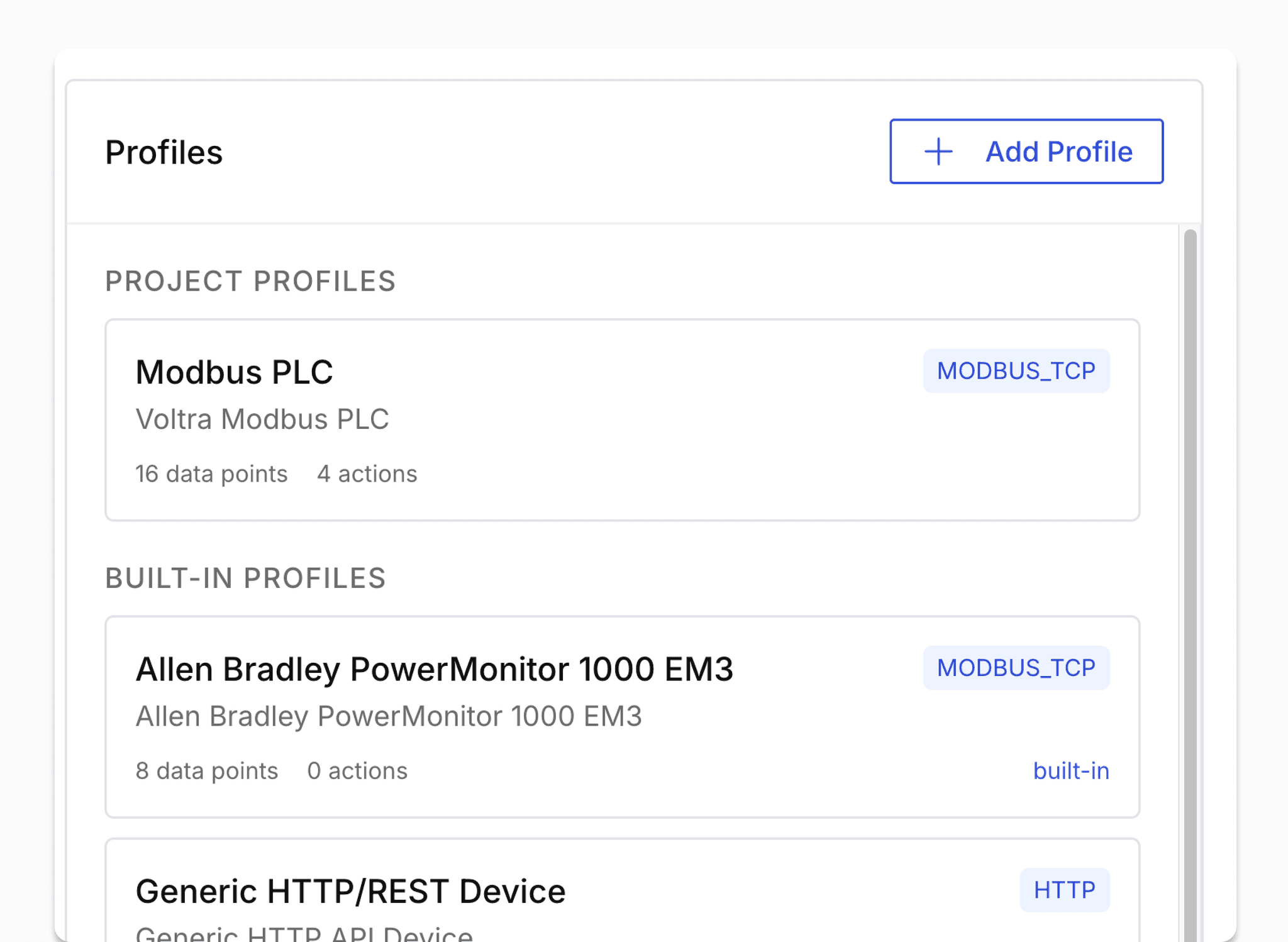
Charging sessions can be scheduled based on vehicle dispatch times, route requirements, and driver shifts. Vehicles are ready when needed without relying on manual coordination or guesswork. Charging becomes predictable and aligned with how the fleet actually operates.
Balance load across chargers, batteries, and other site systems to stay within power limits and avoid demand spikes. Coordinate battery dispatch with charging schedules to flatten peaks. Energy flows are optimized at the site level, not managed device by device.
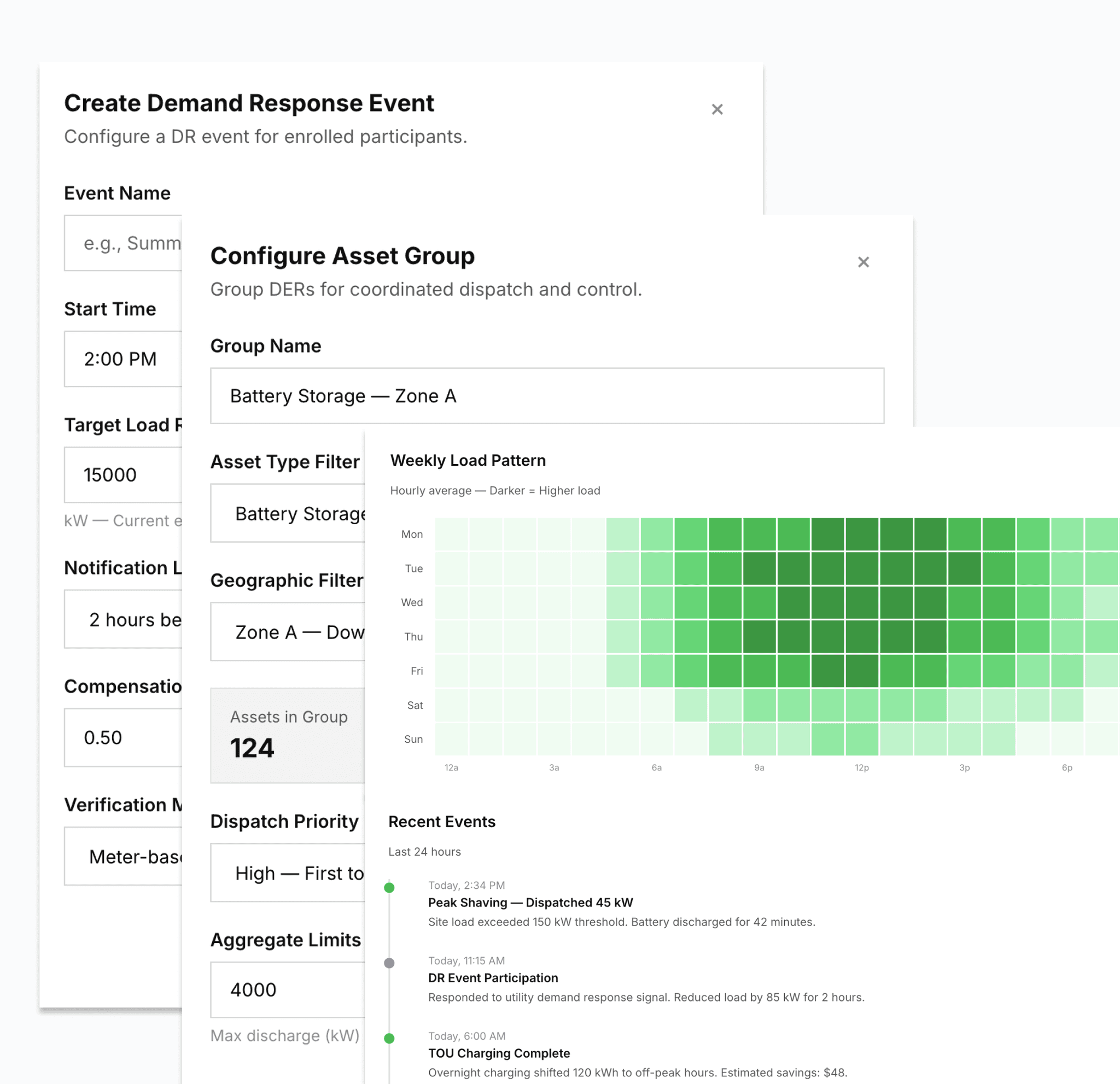
All chargers, batteries, and energy assets across a depot or multiple sites can be monitored from a single operational view. Faults, offline units, and underperforming equipment surface immediately so issues get resolved before they affect dispatch or costs.
04 Impact
IMPACT
Coordinated load management, battery dispatch, and smart scheduling reduce demand charges and shift consumption to cheaper rate periods. Savings compound across every vehicle and every charging session.
Vehicles are charged and ready when dispatch needs them, without last-minute scrambles or missed routes. Predictable charging translates directly into predictable fleet operations.
Centralized monitoring and automated coordination replace manual juggling across vendor portals. Fleet teams stay focused on logistics, not energy infrastructure babysitting.
Instead of managing chargers through one portal, batteries through another, and tracking costs in spreadsheets, operators run the entire depot energy stack through a single system. This replaces fragmented tools, inconsistent data, and reactive firefighting with coordinated operations that fit into existing fleet workflows.
As the fleet grows and more depots come online, energy operations scale without adding headcount. Teams spend less time managing infrastructure and more time optimizing routes, controlling costs, and keeping vehicles in service.
Works with whats already installedAll of the industrial control, chargers, batteries, inverters, and fleet systems already in use can be connected into a single layer. Hardware choices remain flexible, and existing investments are preserved rather than replaced.
This commonly includes depot chargers from major manufacturers, battery storage systems, vehicle telematics platforms, fleet management software, and utility rate data used for cost optimization.
05 Under the hood
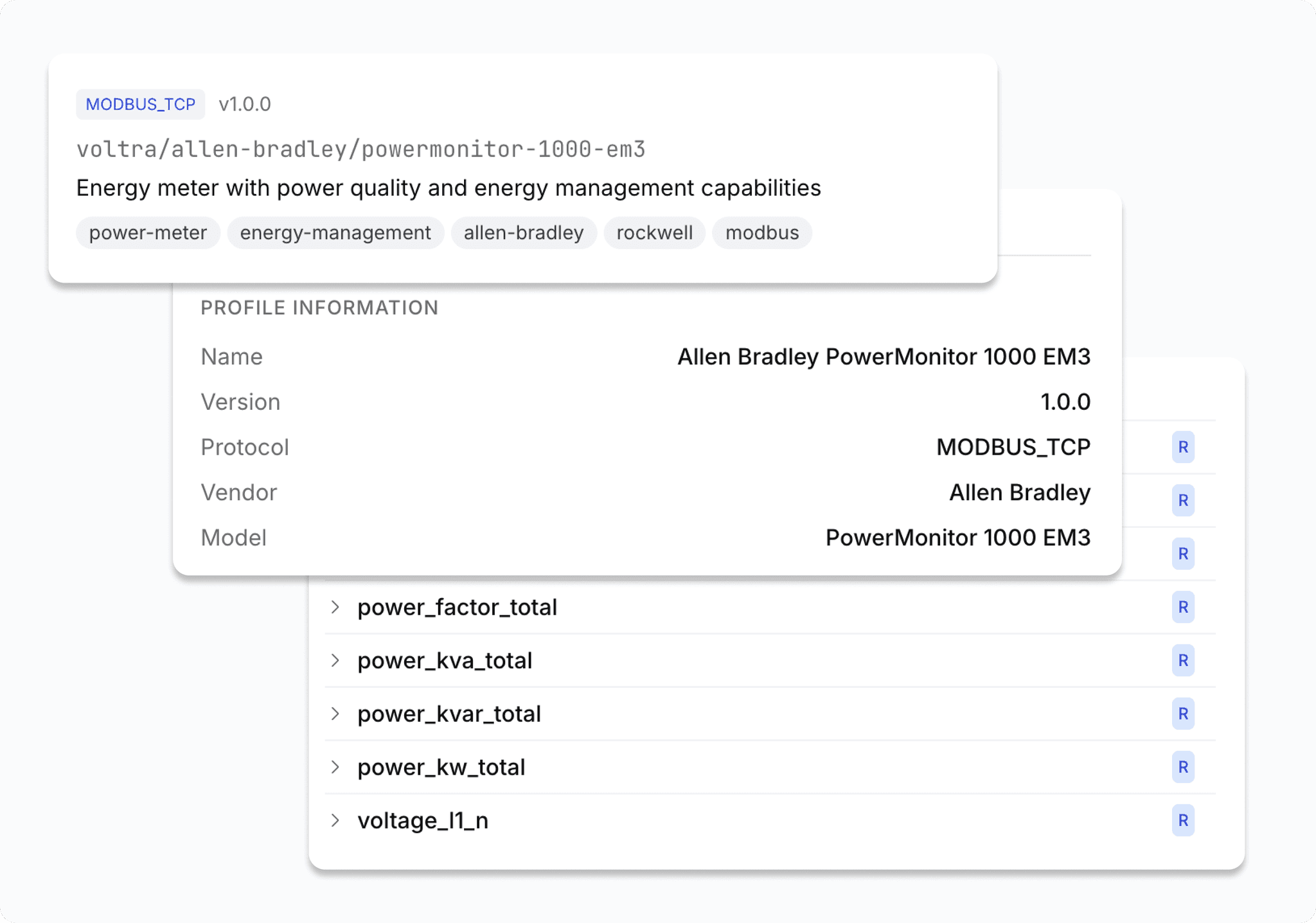
Connectors live in the platform, so every product gets them.
OCPP
1.6J & 2.0.1
OCPI
2.2.1 & 2.3.0
Modbus
TCP & RTU
MQTT
Sensors & brokers
IEEE 2030.5
Utility programs
OpenADR
2.0b & 3.0