What is IEEE 2030.5?
IEEE 2030.5 Smart Energy ProfileReviewed
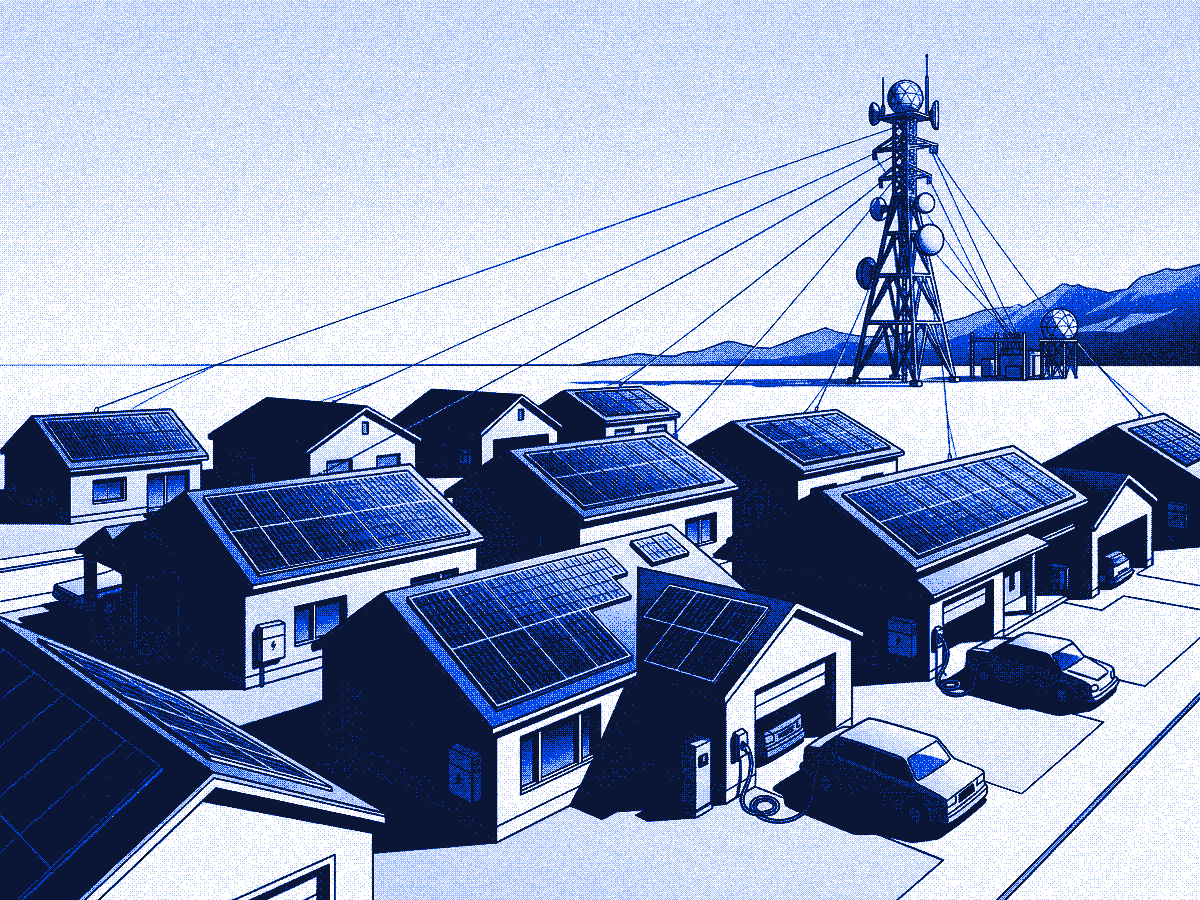
IEEE 2030.5 is an IEEE standard application protocol that lets a utility’s systems talk to distributed energy resources such as solar inverters, batteries and EV chargers, directly or through an aggregator. Based on Smart Energy Profile 2.0, it uses web technology, REST over HTTPS with certificates, to send DER controls, pricing and demand response events and to collect status and meter data.
- StandardIEEE 2030.5 (2013, 2018, 2023)
- OriginSmart Energy Profile 2.0
- TransportREST over HTTPS, TLS 1.2
- Key profileCSIP (California Rule 21)
01
What IEEE 2030.5 does
IEEE 2030.5 gives utilities a standard way to manage equipment they do not own. A utility server publishes DER programs and controls, for example a limit on export or a power-factor setting for a time window, and clients on inverters, gateways or aggregator platforms fetch them, act on them and report back.
The standard is organized in function sets: DER control, metering, pricing, demand response and load control, messaging, flow reservation and others. A deployment uses only the ones it needs.
Key functions
- Scheduled DER controls and default settings
- Export, import and power-factor limits
- Demand response and load control events
- Pricing and tariff information
- Meter readings and DER status reports
- Certificate-based device identity
02
Why IEEE 2030.5 matters
California’s Rule 21 requires smart inverters to support communication, and the Common Smart Inverter Profile (CSIP), built on IEEE 2030.5, is the default protocol for it. Other utilities and states have followed, so IEEE 2030.5 is often the protocol that decides whether a solar or storage project can connect.
As distributed resources grow, utilities need to manage them for local constraints, such as a feeder that cannot take more export at noon. IEEE 2030.5 is one of the three local interfaces IEEE 1547-2018 allows for that job, alongside DNP3 and SunSpec Modbus.
03
How IEEE 2030.5 works
IEEE 2030.5 is RESTful. A server exposes resources, such as a list of DER programs, each with controls and defaults, and clients read them with HTTP GET over TLS, subscribe for changes or poll, and post responses and readings back. Payloads are XML, with an EXI binary option.
Security is built in. Every device has an X.509 certificate from the utility’s public key infrastructure, TLS 1.2 is mandatory with a fixed elliptic-curve cipher suite, and a device is identified by a fingerprint of its certificate. In CSIP, a utility can reach each inverter directly or reach an aggregator that represents many.
01
Utility server
DER programs and controls
02
HTTPS + certificates
TLS 1.2, XML
03
Client
Inverter, gateway or aggregator
04
Reports
Status, meter data, responses
04
How IEEE 2030.5 feeds Voltra
IEEE 2030.5 is one of the utility interfaces Voltra’s grid tools support, alongside OpenADR and DNP3. Controls from a utility are applied through the site model, which keeps each site inside its own electrical limits while it responds.
Learn more
Edge DERMS
Utility interfaces and limits that hold even offline.
Learn more
Grid flexibility
Enroll sites in grid programs and respond to events.
05
Frequently asked questions
Both carry grid signals to customer equipment. OpenADR focuses on demand response events and prices sent to sites and aggregators. IEEE 2030.5 covers that and goes further into direct DER management, such as inverter settings, with device-level certificates.
The Common Smart Inverter Profile is an implementation knowledge for IEEE 2030.5 written for California Rule 21. It fixes which function sets and options a utility server and an inverter or aggregator must support so they work together.
Yes. It began as Smart Energy Profile 2.0 (SEP 2), developed by the ZigBee Alliance and HomePlug, and was adopted by IEEE as 2030.5 in 2013.
Some do. IEEE 2030.5 includes functions for electric vehicle supply equipment, and California has used it for managed charging pilots, but most chargers are managed through OCPP by their network operator.