
Get your megawatts turned on sooner, on a cap your utility can bank
Challenge
Data centers aren’t waiting on construction. They’re waiting on power.
You have megawatts contracted and racks ready, and an interconnection queue quoted in years. Your utility will energize a flexible load long before an inflexible one, because a committed cap is something they can plan around, and a worst-case draw is not.
But the assets that could make your site flexible, the batteries, gensets, and cooling already on your one-line, run on separate systems that were never designed to act together. Today, curtailment at most sites is a runbook and a phone call. That doesn’t bank megawatts.
Solution
An enforced envelope, not a runbook and a phone call
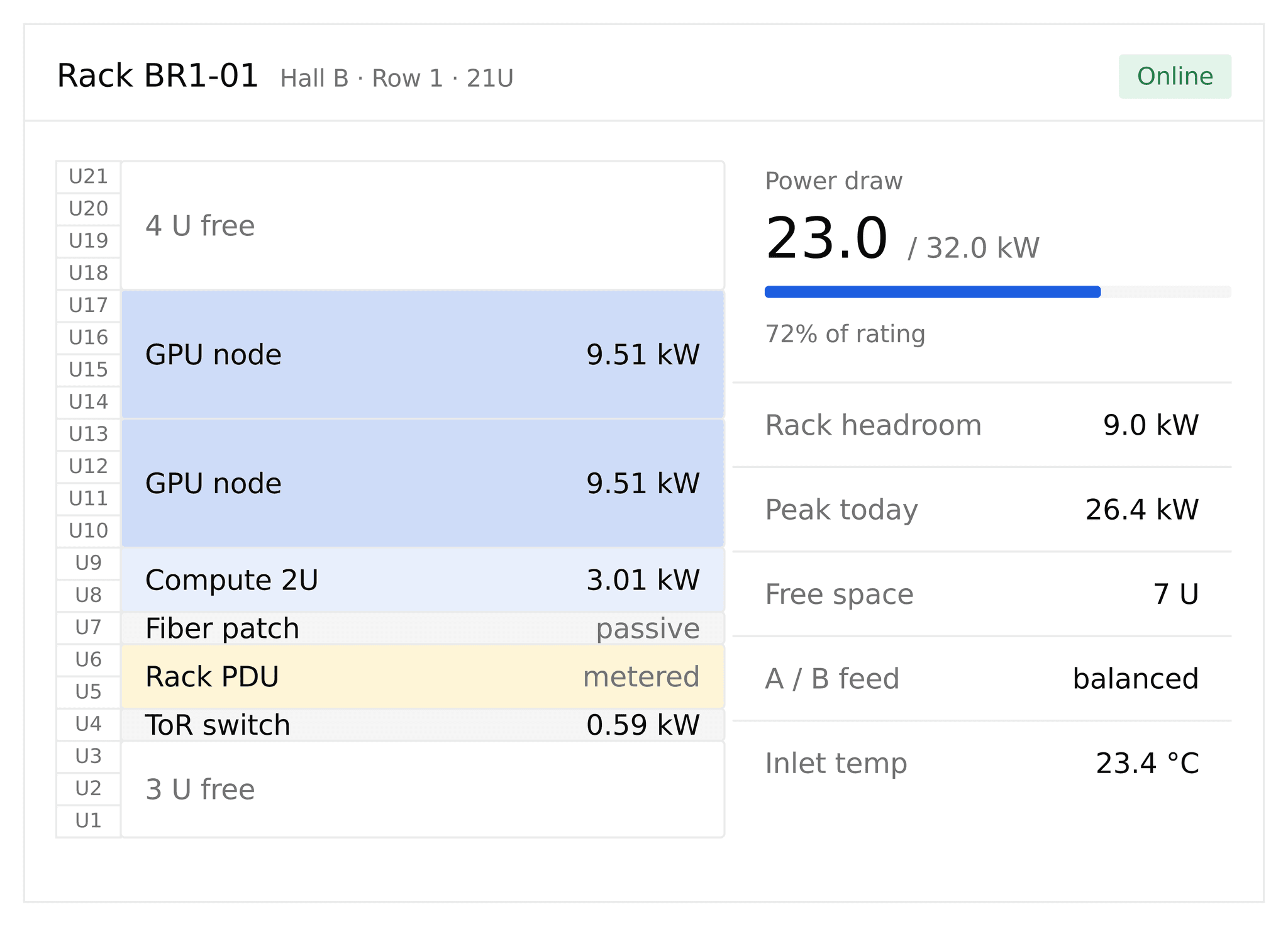
Voltra commits your site to a power cap at the point of common coupling and holds it in real time, on one live model of your electrical plant: the utility feed, switchgear, batteries, gensets, cooling, and EV charging, with the real limits of every panel and breaker.
A committed, enforced, provable cap is what utilities and flexible interconnection programs increasingly reward with earlier energization.
Competencies
One live model of your electrical plant
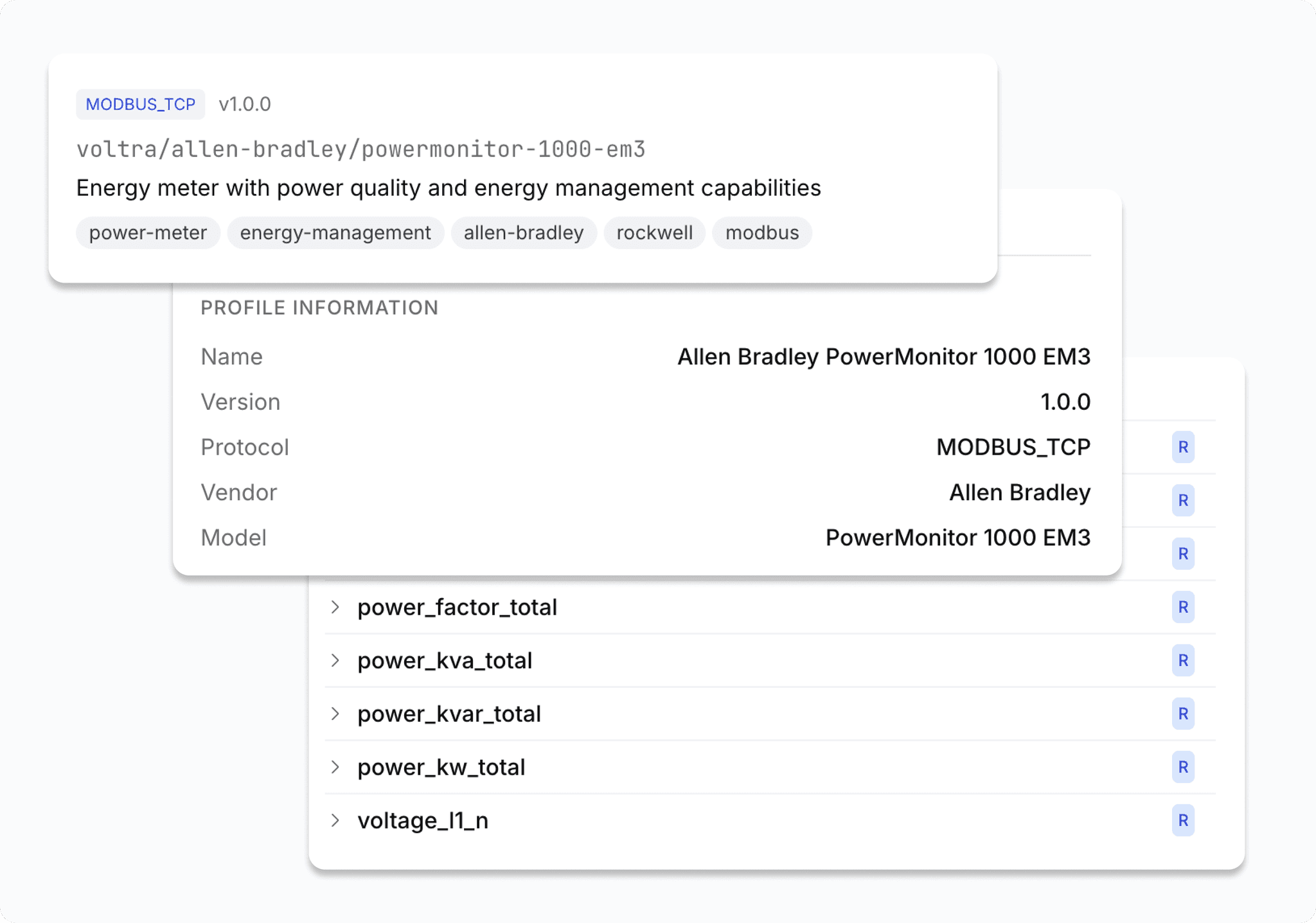
Every feed, panel, breaker, and asset in one governed model, connected over the open protocols your equipment already speaks: Modbus TCP, BACnet/IP, DNP3, SNMP, MQTT, and OCPP. The model carries per-node limits, live loading, and headroom, so you can see what’s binding before you add the next row of racks. Your DCIM or NetBox keeps the inventory, your BMS keeps the cooling loops; Voltra adds the layer none of them ship.
Enforce: a real-time loop, never tenant IT
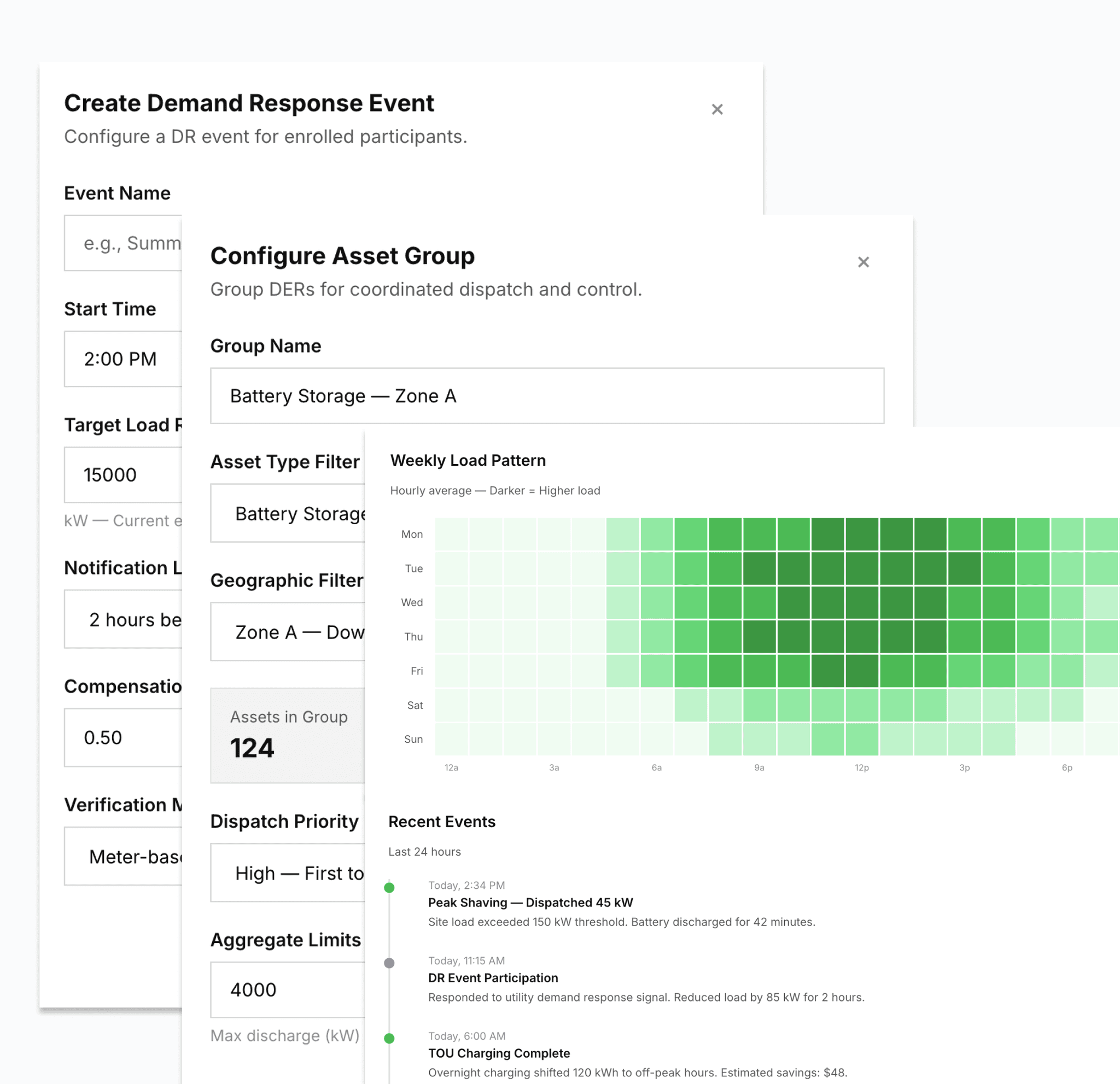
When the site approaches its cap, a real-time loop sheds load by a priority stack you pre-approve: batteries first, then EV charging, then cooling within bounds you set, then gensets. An optimizer chooses the quantities, your limits and reserve floors decide what’s allowed, and every command is checked before it’s admitted. Tenant IT is never in the stack. Your tenants’ SLAs are not part of the equation, by design.
Prove: a record your utility can audit
Every site starts in shadow mode: the platform shows what it would have done, hour by hour, while touching nothing. You graduate to supervised dispatch, then to a contracted envelope, on evidence. And every event produces an M&V-grade record, from trigger and decision timeline to per-asset commands and measured response, that your utility can audit without a site visit. What your site did is never a matter of opinion.
From Design to Operation
1
Connect the site’s electrical assets into one live model. Tenant equipment is never connected.
2
Run in shadow mode and watch, hour by hour, what the envelope would have delivered.
3
Graduate to supervised dispatch, then a contracted envelope your site holds automatically.
IMPACT
Measurable Gains Across Energization, Risk, and Cost
Megawatts Sooner
A site that commits to an enforced cap changes the interconnection conversation. Flexible load is what utilities and a growing set of interconnection programs reward, and a cap they can bank, backed by an audit-ready record, is the strongest card a power-constrained operator can play.
Your Plant Stays Yours
Shadow mode first, capability tiers you grant per site, one-tap override, and a fail-safe posture your team configures for connectivity loss and stale data. Tenant compute is never a control target. The platform earns control on evidence instead of assuming it.
Then It Starts Earning
Once the envelope is proven, the same machinery enrolls in demand-response programs and shaves demand charges, so the system that unlocked your power also pays for itself, every billing period, not just during events.
One platform under the envelope
The platform underneath is the same one that runs demand response, storage optimization, and charge management across Voltra’s energy business today. Voltra Fabric connects and models the electrical plant, every dispatch reads that one vendor-agnostic model, and demand response events flow into the same dispatch path over open standards like OpenADR and IEEE 2030.5.
Your existing tools keep their jobs: your DCIM or NetBox keeps the inventory, your BMS keeps the cooling loops, and your aggregator keeps market access.
Now onboarding design partners
The Voltra Data Center Cloud is new, and we’re building it the way the claim demands: a Q3 2026 cohort, hands-on, shadow-mode first. Partners start on Fabric, watch the platform decide before it acts, and add the envelope per site once their own team has reviewed the evidence.
Pricing tracks usage and your portfolio rather than your internal headcount. Built for colocation and hyperscale sites, campuses and industrial parks, and the developers and integrators who build them.

