New Revenue Per Spot
EV charging turns standard parking spaces into higher-yield assets. Each charging session adds incremental revenue on top of parking fees.
/infrastructure
/ai
One core under every product: connect, model, coordinate and prove.
How Fabric works/optimize
Four products on one platform. Start with the one you need; the next one uses the devices and data you already connected.
All products/energy & grid
/facilities & industry
/platform
Find what you run by name. Every solution runs on the same platform, so they share devices, data and one model of your site.
All solutionsSelect your industry to see how Voltra fits for you.
All industriesFor Parking Operators

01 Challenge & Solution
Challenge
Parking software providers and lot operators are under pressure from customers and property owners to add EV charging to their sites. Charging infrastructure gets installed, but managing it requires different tools, different expertise, and different vendor relationships than parking. Most operators end up running two parallel operations—one for parking, one for charging—with no integration between them.
Solution
This unlocks the ability to offer EV charging as a seamless extension of parking services. Operators can manage chargers alongside parking infrastructure, unify payments and access control, and present a single experience to drivers and property owners. Charging becomes a parking amenity, not a separate business line to staff and manage.
02 Products
Each runs on the same platform. Start with one and add the next when you need it.
Run chargers from any maker on one network.
Learn moreEnroll flexible load and answer grid events.
Learn more03 Competencies
Competencies
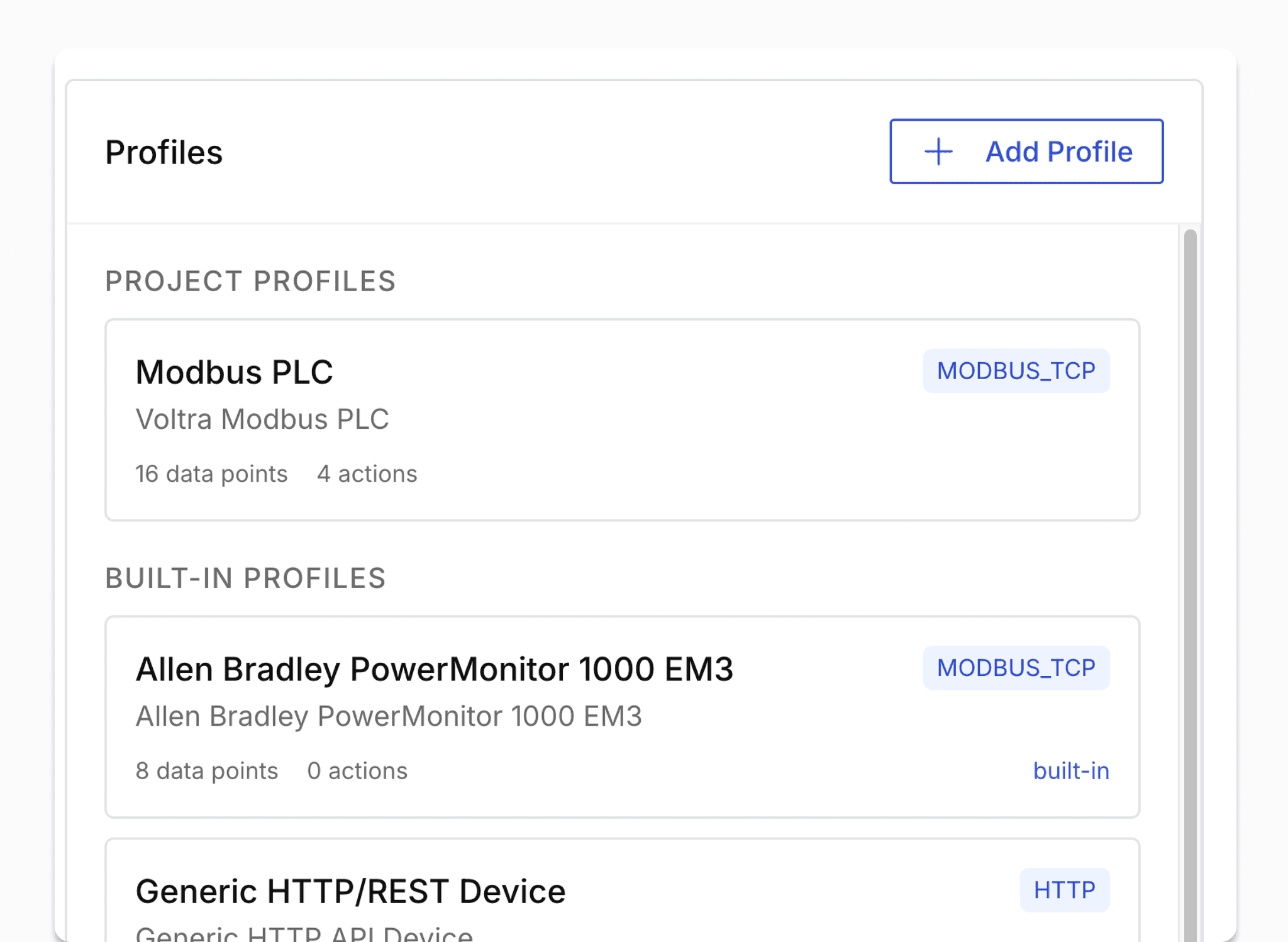
Drivers can access charging using the same credentials, apps, or payment methods they use for parking. Parking and charging fees can be bundled, split, or billed together based on operator preferences. One transaction, one experience, regardless of whether the driver parks or charges.
Charger status, uptime, and faults flow into the same operational view as parking infrastructure. Site staff can monitor and respond to charging issues using familiar tools and processes. Charging doesn’t require a separate NOC or specialized team.
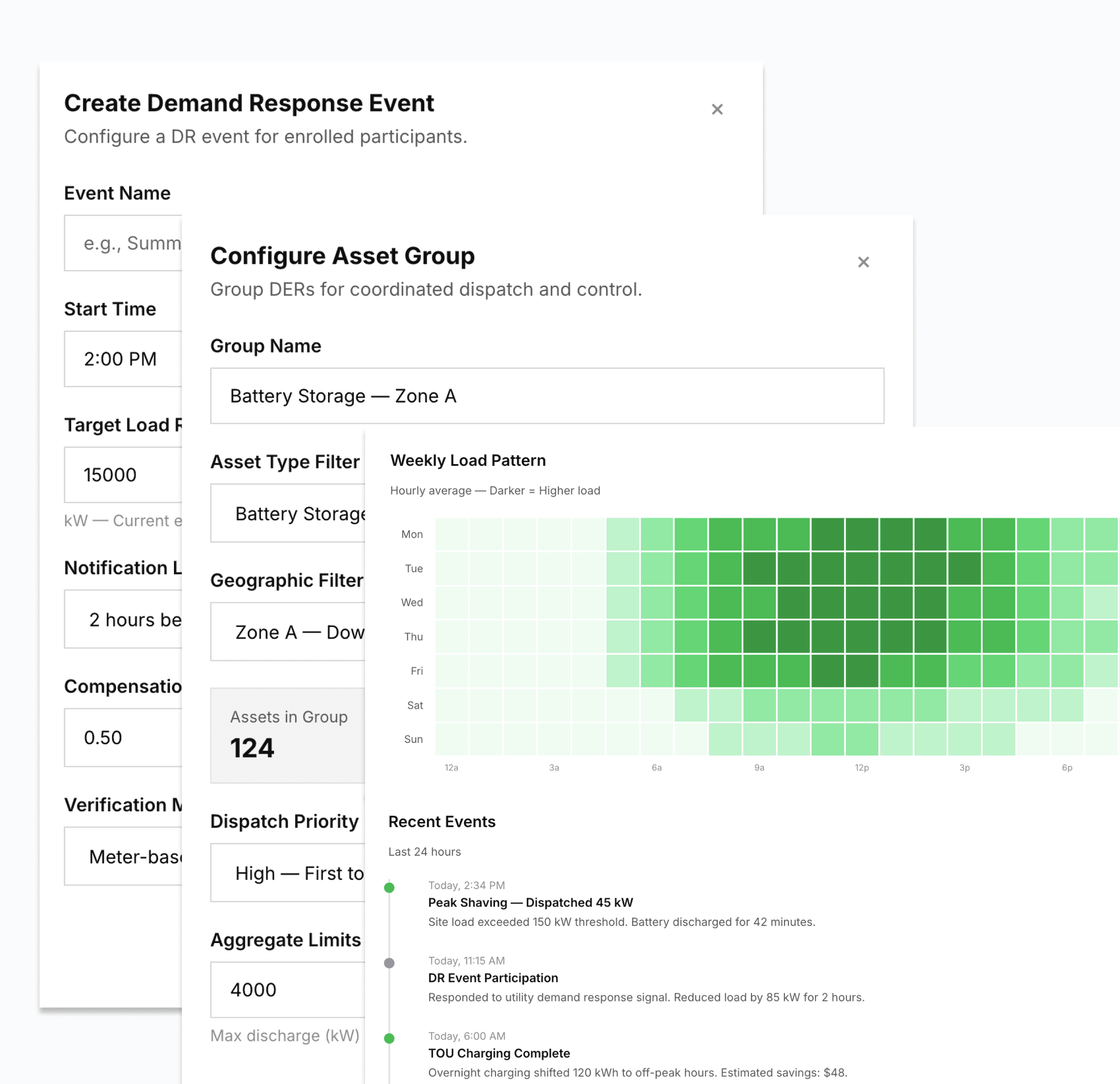
Charging rates can be set based on time, energy, parking duration, or membership status. Policies can vary by site, lot, or customer segment without requiring charger-by-charger configuration. Operators retain control over how charging is priced and bundled with parking.
04 Impact
IMPACT
EV charging turns standard parking spaces into higher-yield assets. Each charging session adds incremental revenue on top of parking fees.
Property owners and customers increasingly expect charging as part of parking. Operators who deliver integrated charging retain accounts that would otherwise look elsewhere.
Managing charging through existing parking tools eliminates the need for separate dashboards, vendor contracts, and support processes. One team runs both operations.
All of the parking management software, access control systems, and payment platforms already in use can be connected to a unified charging layer. Chargers from multiple vendors can be integrated without replacing existing parking infrastructure.
This commonly includes parking management platforms, license plate recognition systems, mobile payment apps, and access control hardware that operators already deploy across their sites.
05 Under the hood
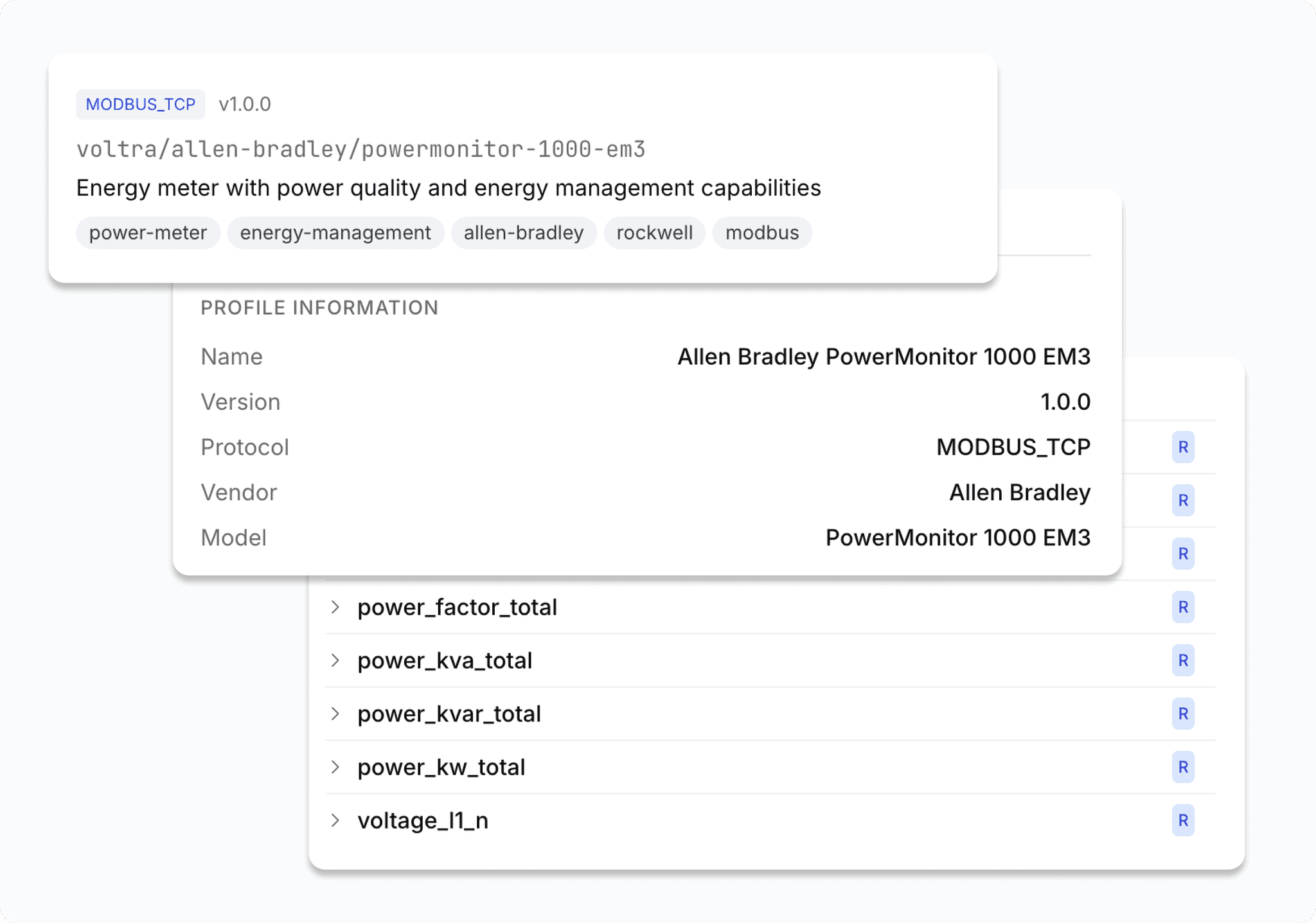
Connectors live in the platform, so every product gets them.
OCPP
1.6J & 2.0.1
OCPI
2.2.1 & 2.3.0
Modbus
TCP & RTU
MQTT
Sensors & brokers
IEEE 2030.5
Utility programs
OpenADR
2.0b & 3.0