Higher-Value Installations
Commissioning and network setup can be billed as part of the installation scope. Jobs that include full turnkey delivery command better margins than hardware-only installs.
/infrastructure
/ai
One core under every product: connect, model, coordinate and prove.
How Fabric works/optimize
Four products on one platform. Start with the one you need; the next one uses the devices and data you already connected.
All products/energy & grid
/facilities & industry
/platform
Find what you run by name. Every solution runs on the same platform, so they share devices, data and one model of your site.
All solutionsSelect your industry to see how Voltra fits for you.
All industriesFor Electricians

01 Challenge & Solution
Challenge
Electrical contractors are increasingly called on to install EV chargers, battery systems, and solar alongside traditional electrical work. The physical installation is familiar territory, but getting devices online, configured, and connected to networks or payment systems falls outside core electrical expertise. Most electricians finish the install and walk away, leaving customers to figure out the software—or get called back when something doesn’t work.
Solution
This unlocks the ability to deliver fully commissioned, network-connected installations without becoming a software specialist. Electricians can provision devices, verify connectivity, and hand off working systems to customers or operators—all from a single tool designed for field use. The job is done when you leave, not when someone else finishes the configuration.
02 Products
Each runs on the same platform. Start with one and add the next when you need it.
Run chargers from any maker on one network.
Learn moreBatteries, solar and loads, run as one system.
Learn more03 Competencies
Competencies
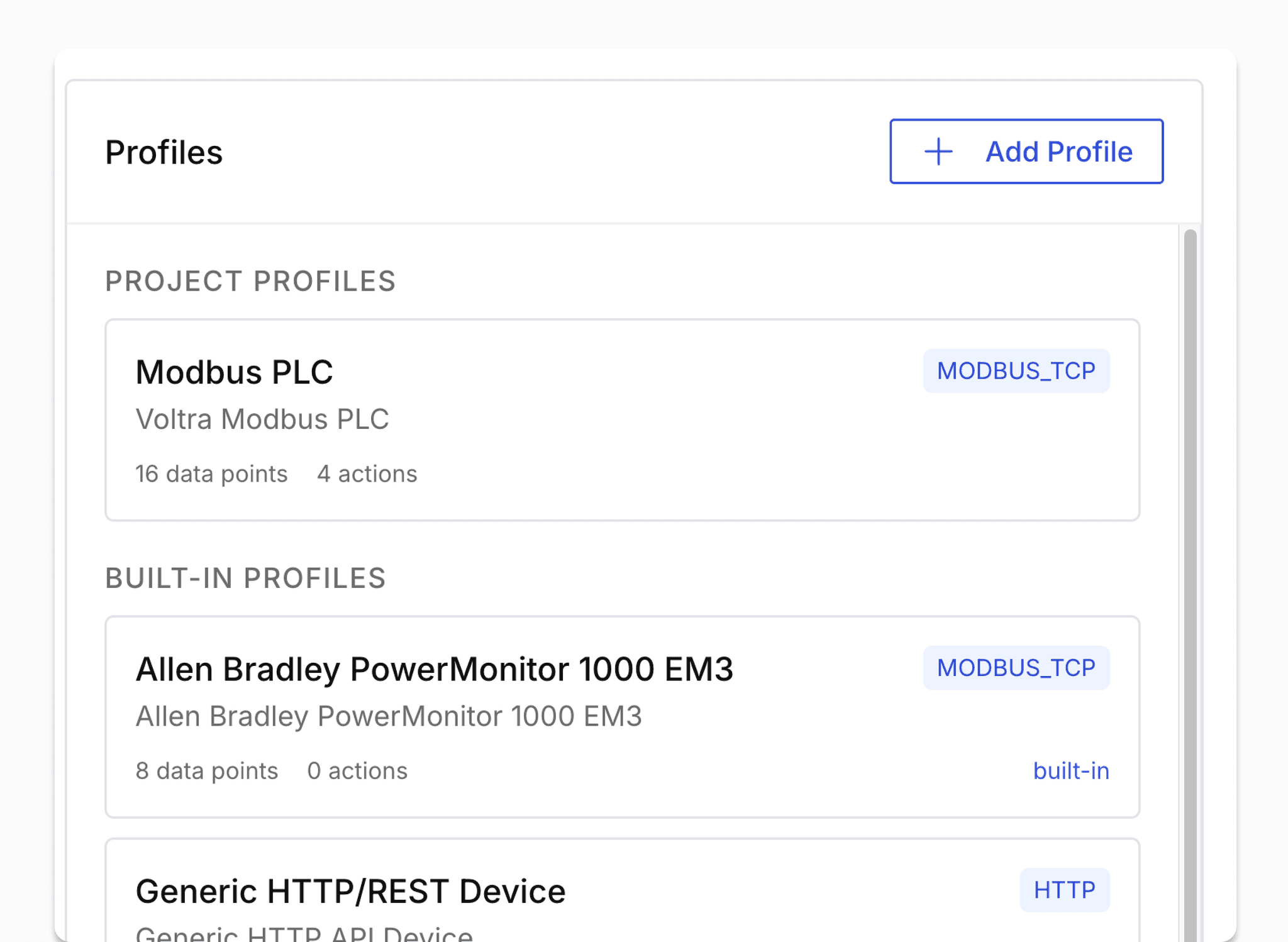
Energy hardware across chargers, inverters, PLCs, meters, and sensors can be brought into a single operational surface regardless of vendor. Both standardized and proprietary protocols are supported, enabling consistent behavior across mixed environments. Systems can be connected in greenfield or brownfield sites without redesigning the underlying architecture.
All telemetry and events are validated, timestamped, and structured into a consistent data model across devices. Data remains uniform across vendors and sites, eliminating downstream transformation and reconciliation work. Teams gain access to both real-time and historical data for monitoring, reporting, and analysis.
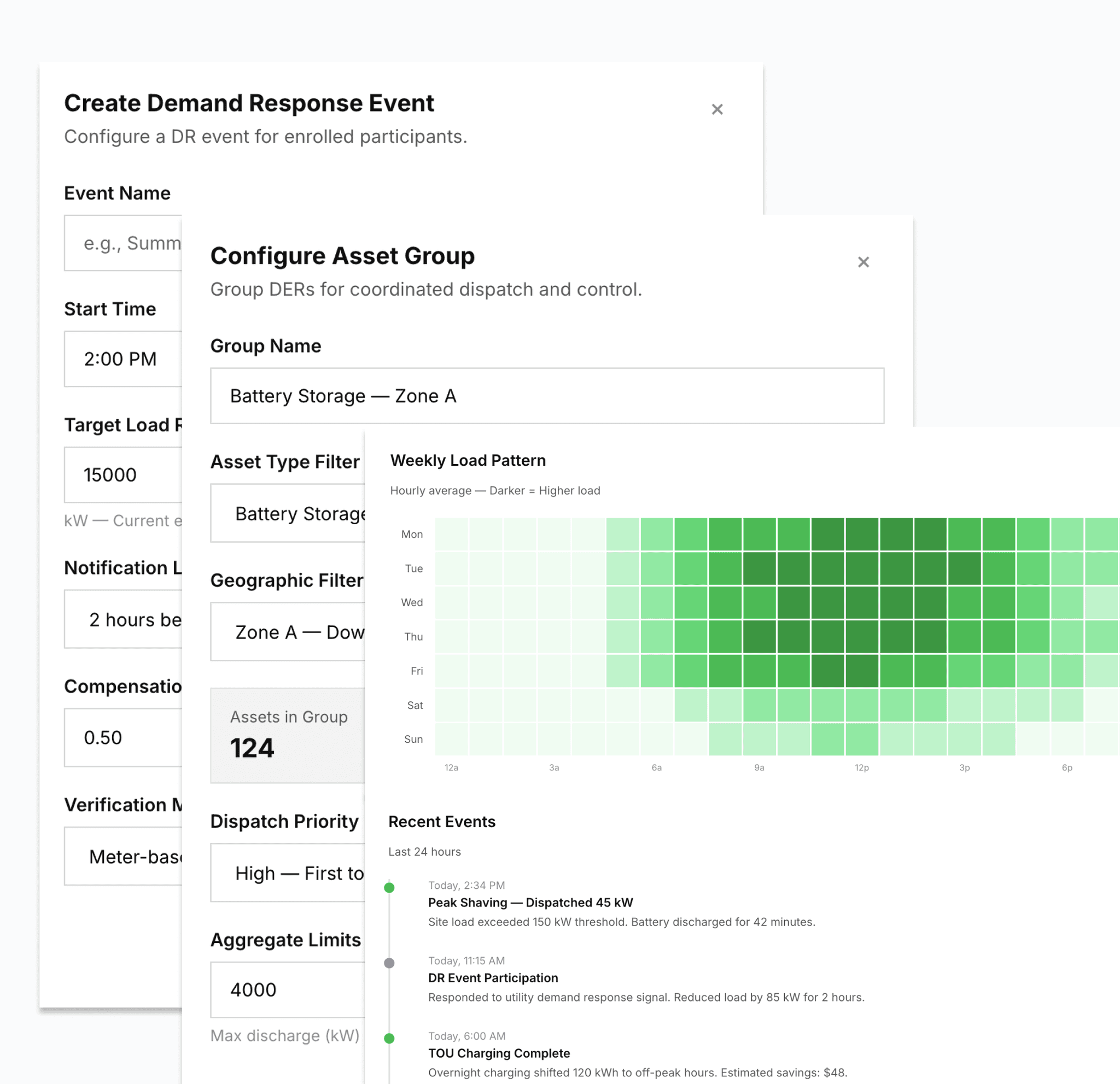
Once devices are commissioned, you decide what happens next. Hand off to site operators or property managers with documentation and verified status, and your scope is complete. Or, offer ongoing software and support as an add-on service—bundle monitoring, alerts, and maintenance into a recurring revenue stream. Choose whatever makes more sense for you.
04 Impact
IMPACT
Commissioning and network setup can be billed as part of the installation scope. Jobs that include full turnkey delivery command better margins than hardware-only installs.
Offer ongoing monitoring, alerts, and support as a service. Customers pay monthly, you get notified if something goes wrong, and you stay top of mind for future work. Turn one-time installs into long-term relationships.
Verifying connectivity and configuration on-site eliminates callbacks for software issues that should have been caught during install. When you do get a call, remote diagnostics often solve it without a truck roll.
Instead of learning a different provisioning app for every charger brand or energy device, electricians use a single commissioning tool that works across hardware. This replaces the confusion of vendor-specific workflows, forgotten logins, and inconsistent processes with a repeatable approach that works the same way on every job.
As crews take on more energy work, the commissioning process stays consistent. Time spent fumbling with unfamiliar software drops, and confidence in delivering complete installations grows.
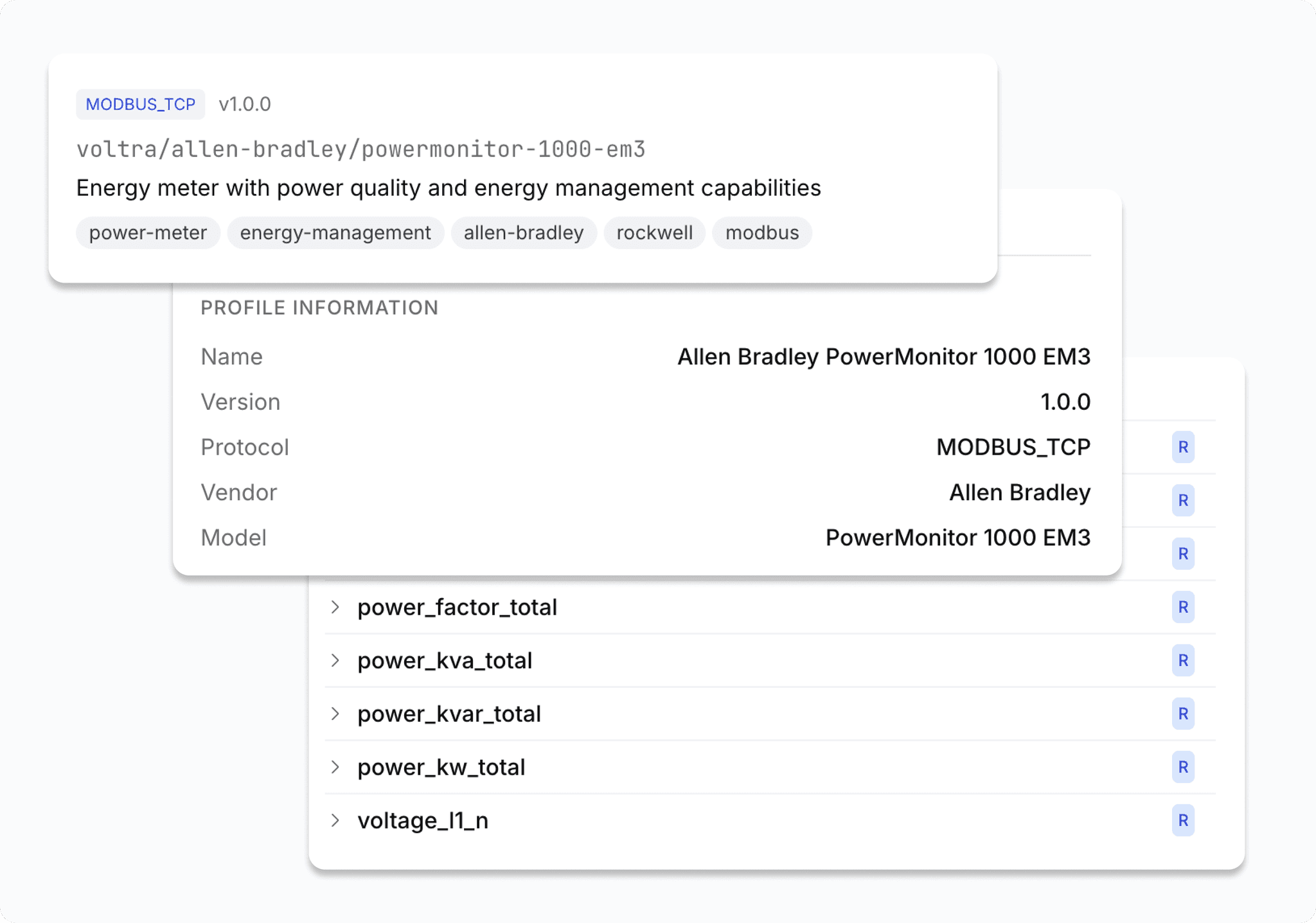
05 Under the hood
Connectors live in the platform, so every product gets them.
OCPP
1.6J & 2.0.1
OCPI
2.2.1 & 2.3.0
Modbus
TCP & RTU
MQTT
Sensors & brokers
IEEE 2030.5
Utility programs
OpenADR
2.0b & 3.0