Challenge
Custom energy projects are still delivered one system at a time.
Consulting and engineering firms design and deploy custom energy systems across chargers, batteries, solar, and industrial control. Each project introduces new hardware, new protocols, and new data models that must be stitched together manually. Most teams spend more time integrating systems than delivering value to clients.
Solution
A repeatable foundation for energy delivery at scale.
Firms can unify diverse energy systems, operate from a consistent data and control model, and reuse operational logic across clients without re-engineering each deployment. Delivery becomes faster, margins improve, and teams can focus on system design and client outcomes rather than integration work.
Competencies
Unified connectivity across devices and systems
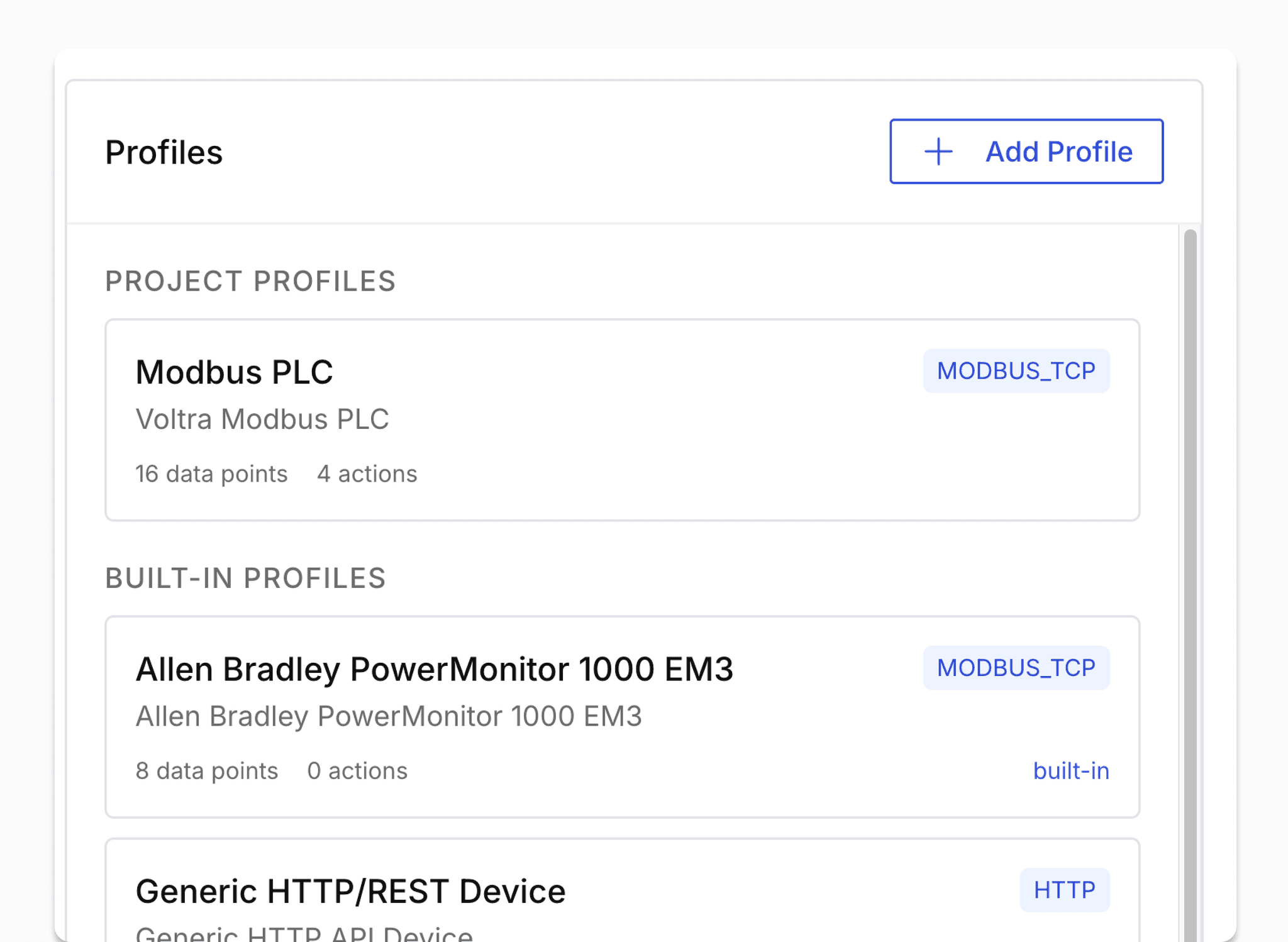
Energy hardware across chargers, inverters, PLCs, meters, and sensors can be brought into a single operational surface regardless of vendor. Both standardized and proprietary protocols are supported, enabling consistent behavior across mixed environments. Systems can be connected in greenfield or brownfield sites without redesigning the underlying architecture.
1
A consistent data model across every project
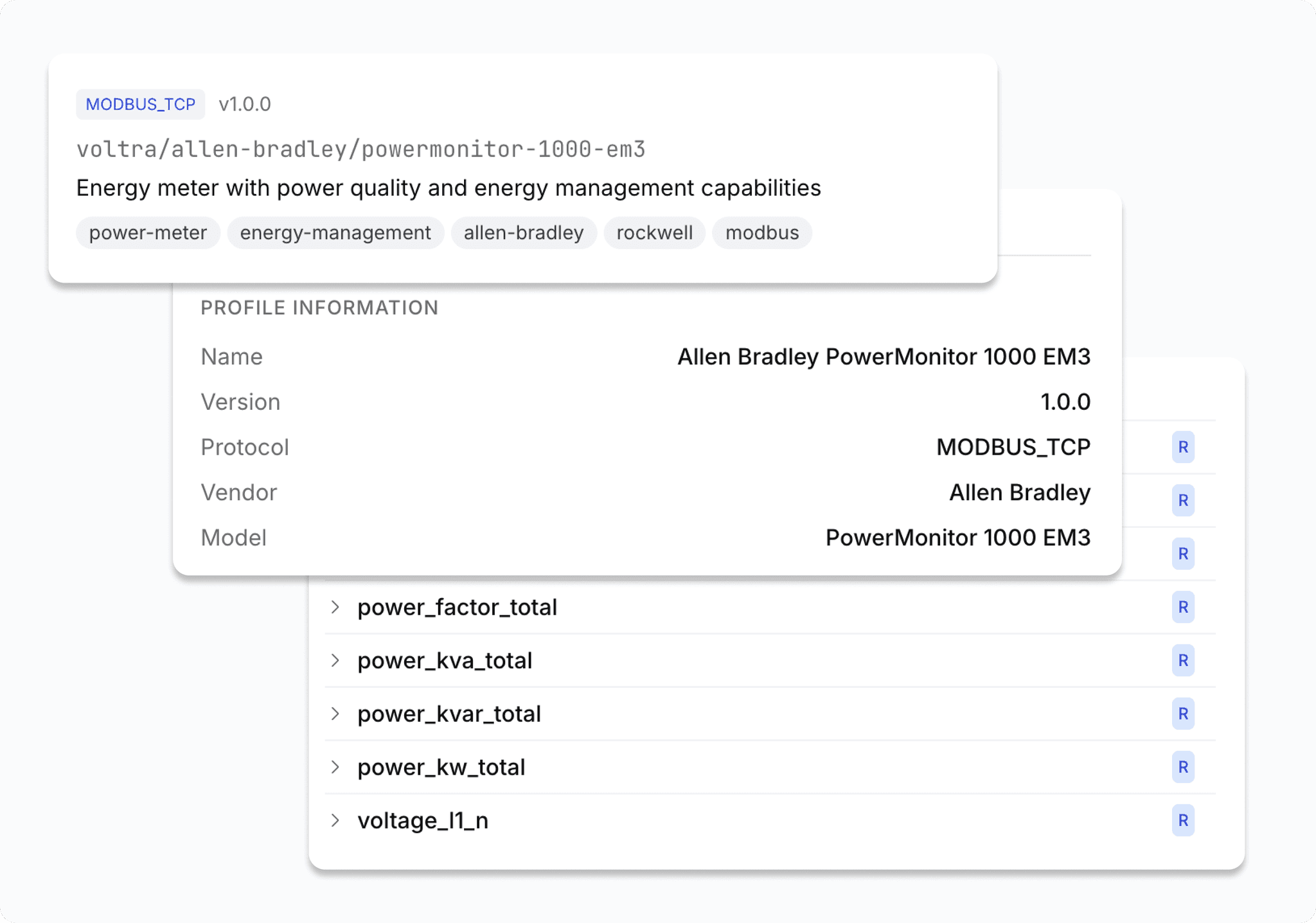
All telemetry and events are validated, timestamped, and structured into a consistent data model across devices. Data remains uniform across vendors and sites, eliminating downstream transformation and reconciliation work. Teams gain access to both real-time and historical data for monitoring, reporting, and analysis.
2
Coordinated control and automation at the site level
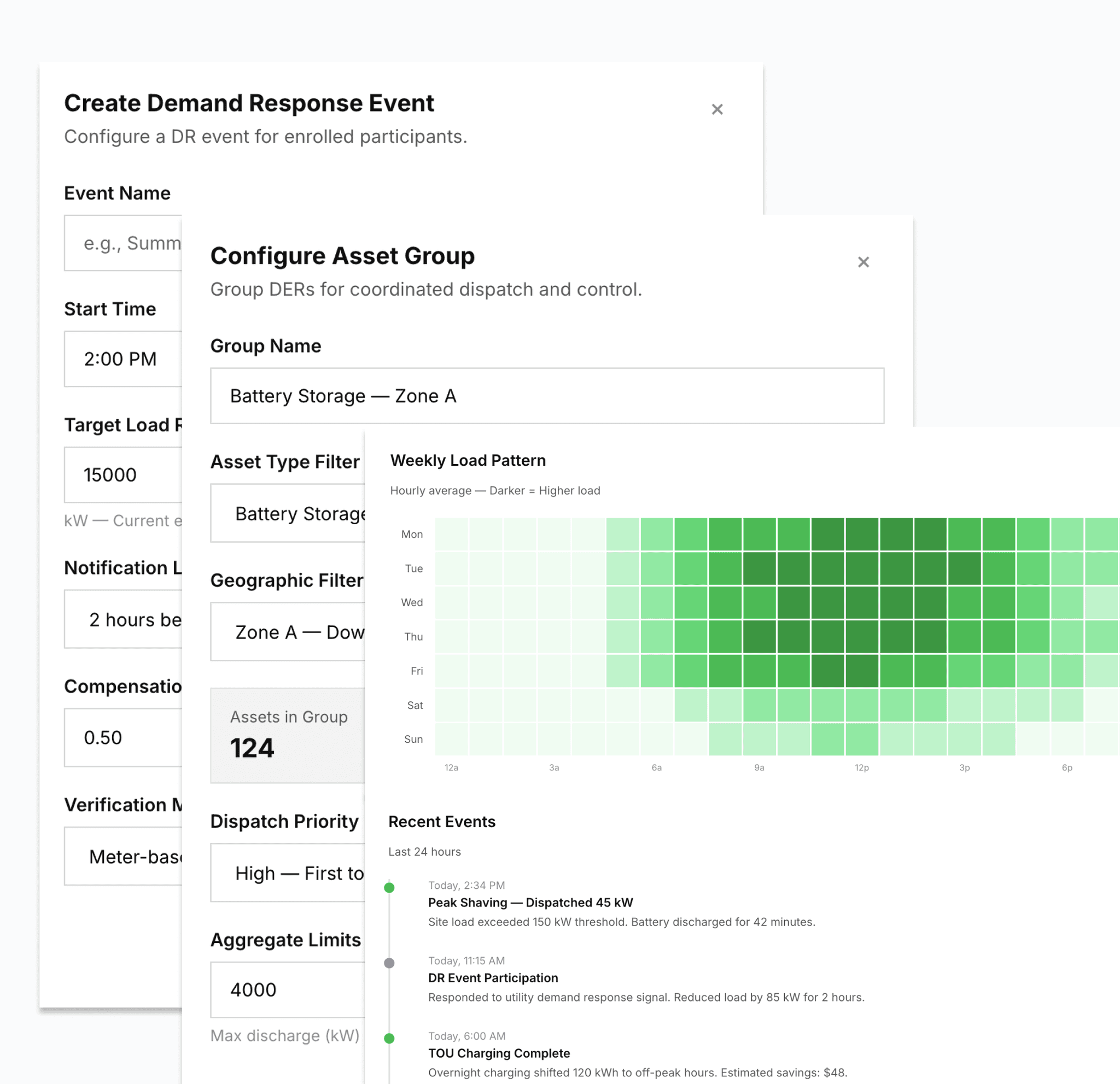
Devices and systems can be controlled programmatically through a unified control surface. Load management, sequencing, and orchestration logic operate consistently across heterogeneous infrastructure. Automation can respond dynamically to live site conditions, enabling closed-loop operational control.
3
From Design to Operation
1
Connect site hardware into a single operational layer.
2
Data and control are unified across all systems without custom glue code.
3
The firm delivers monitoring, automation, and optimization as part of the project scope.
IMPACT
Measurable gains across delivery, margin, and scale
Higher Project Margins
Reducing custom software per engagement lowers engineering overhead and limits rework. Teams retain more value from each project while maintaining flexibility for client-specific requirements.site hardware into a single operational layer.
Faster Time to Deployment
Standardized foundations compress implementation timelines by weeks or months. Projects move from design to operation with fewer blockers and less coordination friction.
Expanded Service Revenue
Firms can layer monitoring, optimization, and ongoing operational services on top of delivered systems. This creates recurring revenue without increasing delivery complexity.
One operational core instead of one-off solutions
Instead of rebuilding integrations, data pipelines, and control logic for every client, teams operate from a shared operational foundation that adapts to different sites and system configurations. This replaces fragmented tools, one-off scripts, and vendor-specific workflows with a reusable core that compounds in value over time.
As the foundation matures, each new deployment benefits from prior work, reducing delivery risk and operational overhead. Teams spend less time maintaining infrastructure and more time designing systems, improving performance, and expanding what they can reliably offer.

1