Skip to content

Come see us at RE+ 2026Las Vegas, November 17–19 · Booth C7082, Central Hall

Read more about RE+ 2026 · Booth C7082

Voltra Fabric

Every device on site, connected and modeled once.

From any vendor, in one live model every Voltra product runs on.

Get Started
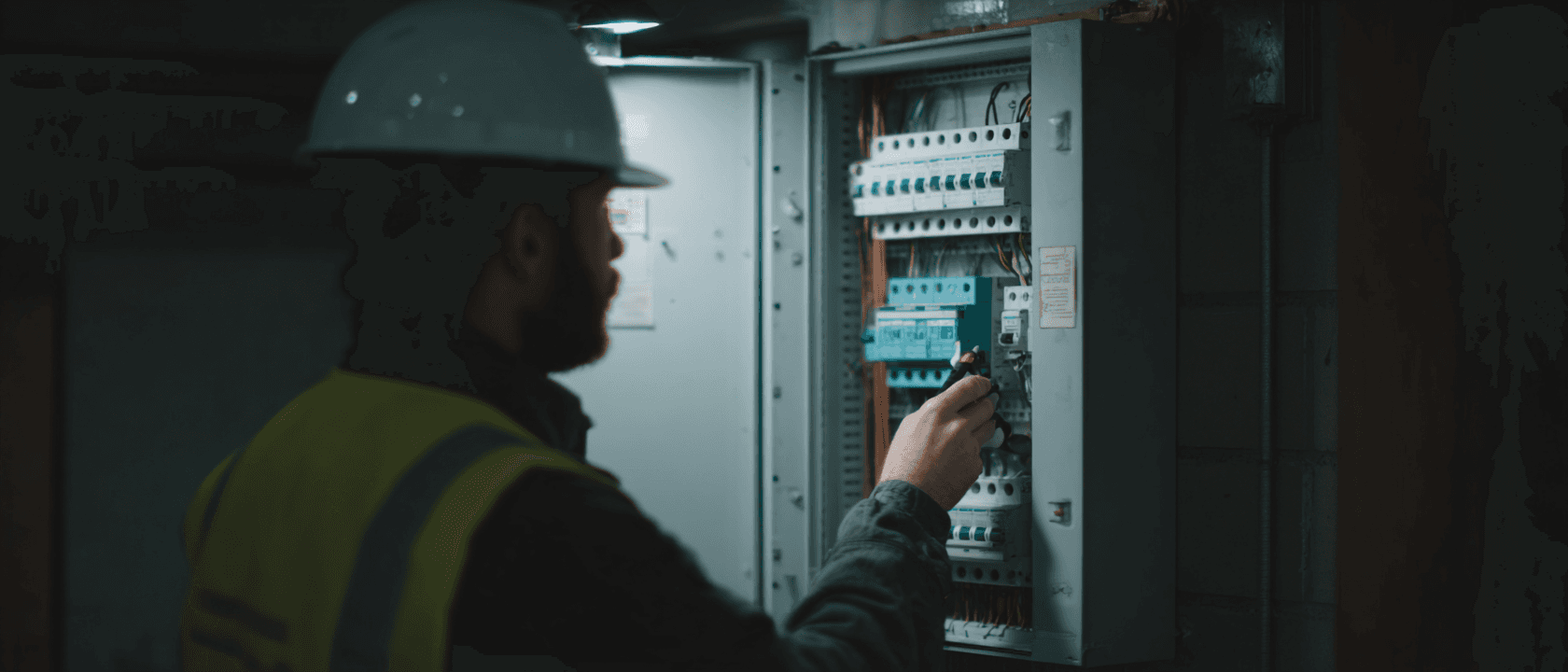
A site is dozens of devices from different vendors, each wired up by hand. Fabric connects them once, so every product you add starts from what’s already there.

Every product runs on Fabric.

Devices sit underneath it and every solution sits on top.

Everything between your software and your devices, handled.

  • Speaks every protocol

    Native stacks for the hardware on site, plus the vendor clouds behind it.

  • Keeps every connection up

    Each connection is supervised and restarts on its own when it drops.

  • Keeps every device accurate

    One live model of each device and data point, typed and in real units.

  • Keeps firmware current

    Versions tracked and updates rolled out, with every install on record.

  • Streams the telemetry

    Readings from every device in one format, live and with history.

  • Carries every command

    Setpoints and schedules turned into each device’s native writes.

Four steps, done once per site.

  1. Connect

    Reach the devices already on site.

    Fabric reads each device in its own protocol and translates it into one shared format.
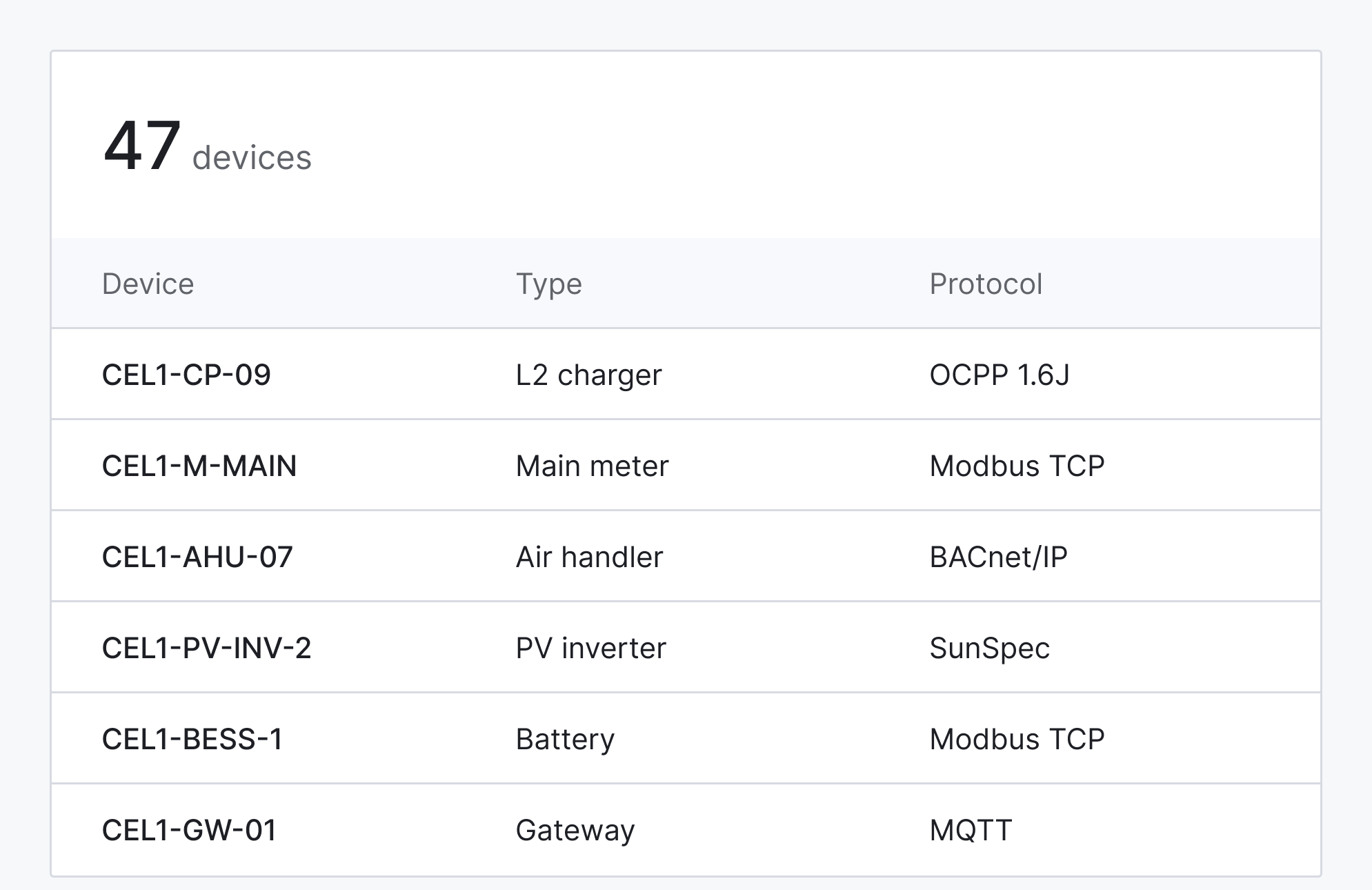
    A list of 47 devices, each on its own protocol: an L2 charger on OCPP 1.6J, the main meter and a battery on Modbus TCP, an air handler on BACnet/IP, a PV inverter on SunSpec, a gateway on MQTT.
  2. Model

    Know what you have and how it connects.

    One map of the site: which panel feeds which charger, which meter measures which feeder.
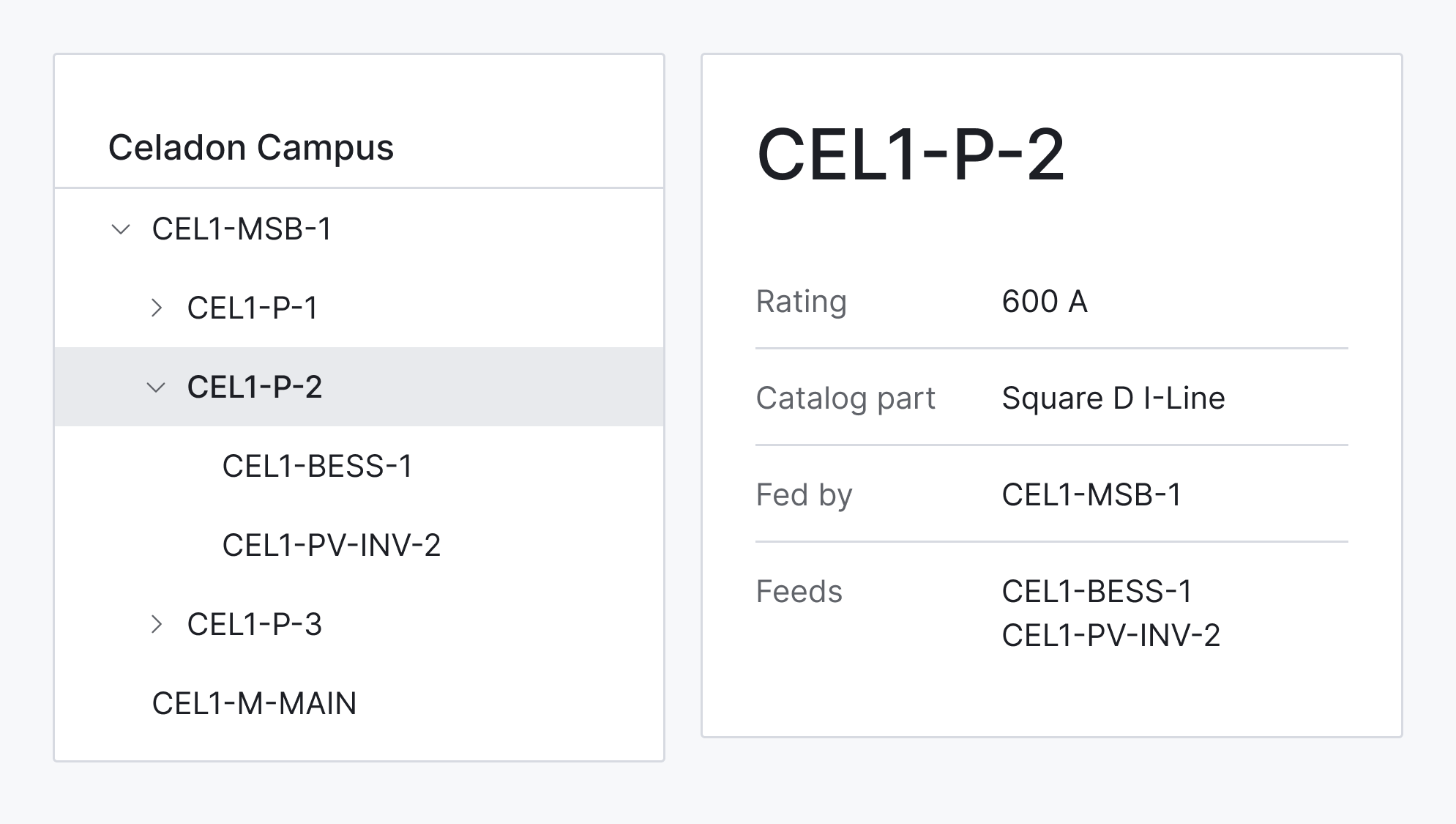
    Panel CEL1-P-2 selected in the Celadon Campus tree: rated 600 A, a Square D I-Line, fed by CEL1-MSB-1 and feeding CEL1-BESS-1 and CEL1-PV-INV-2.
  3. Configure

    Make devices work together from the model.

    Settings come from the model, previewed before they’re written and checked after.
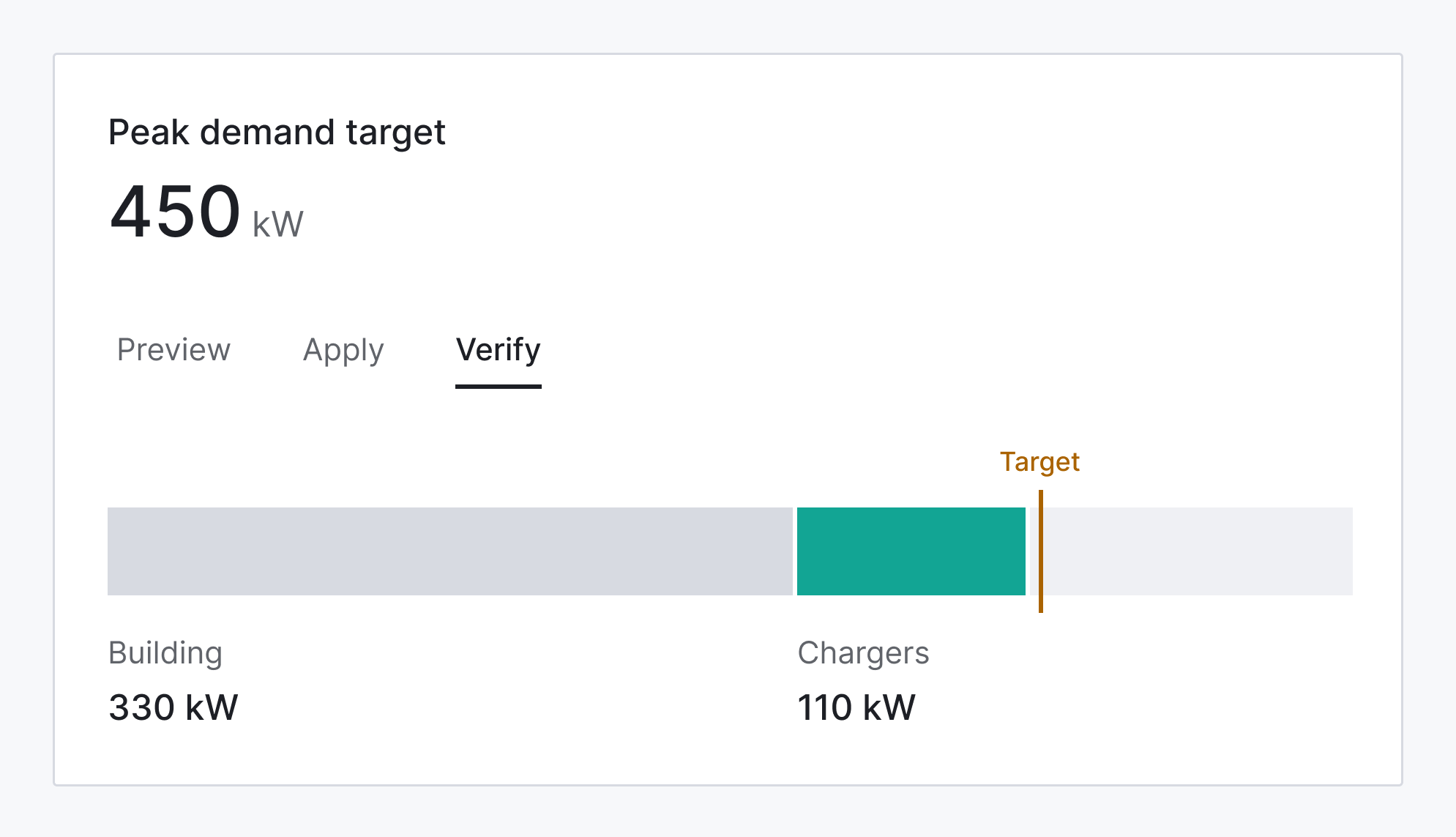
    A 450 kW peak demand target on its Verify step: the building at 330 kW and the chargers at 110 kW, together under the target line.
  4. Maintain

    Keep it true as the site changes.

    Fabric flags where the site and its model disagree, and logs every change to either.
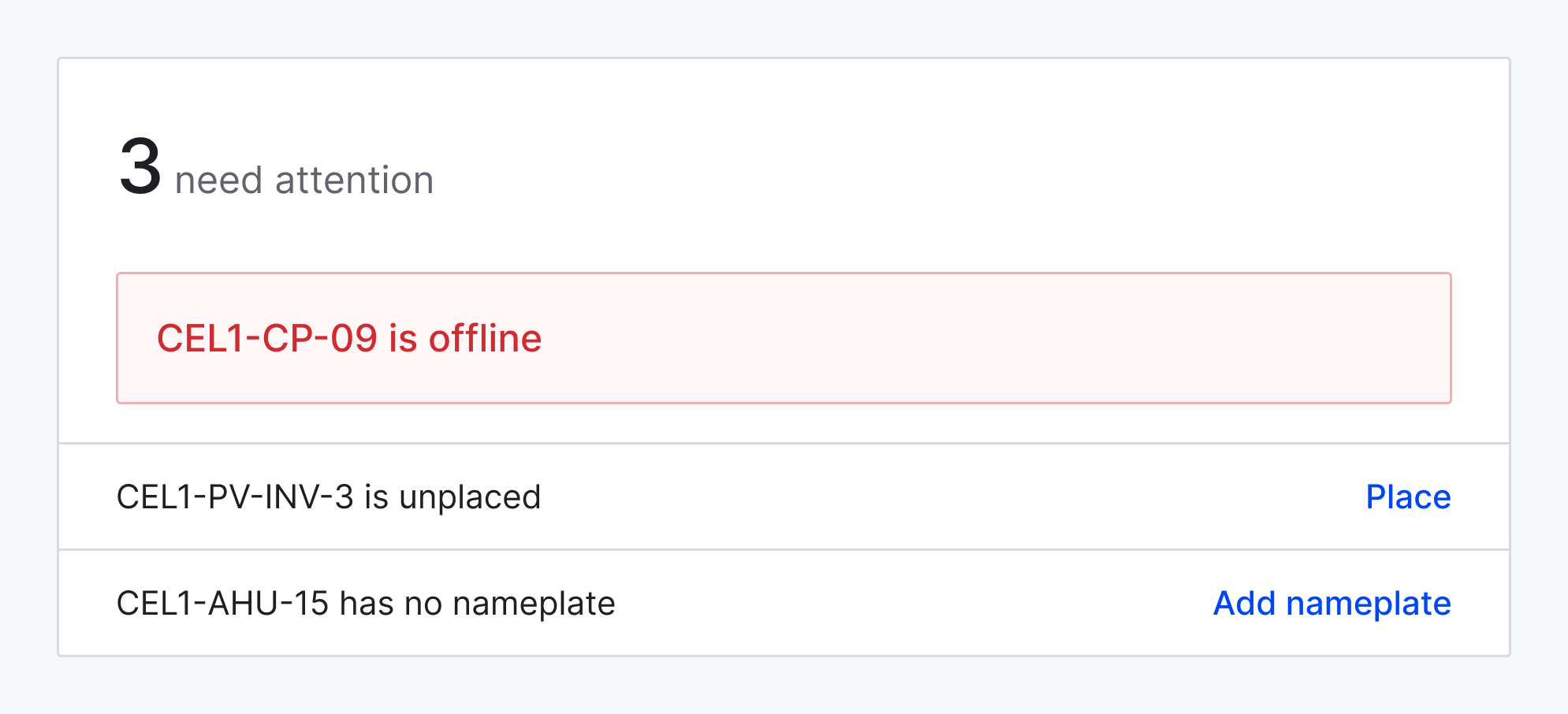
    Three items need attention: charger CEL1-CP-09 is offline, inverter CEL1-PV-INV-3 is unplaced with a Place action, and air handler CEL1-AHU-15 has no nameplate, with an Add nameplate action.

Connected to your software.

Data Bridge sends device data to your data lake, BI and observability tools.

All integrations
  • Snowflake
  • Databricks
  • Tableau
  • Power BI
  • InfluxDB
  • Apache Kafka
  • Microsoft Excel
  • Google Sheets
  • AWS
  • Microsoft Azure
  • Google Cloud
  • ServiceNow
  • Jira
  • IBM Maximo
  • PagerDuty
  • Opsgenie
  • Statuspage
  • Zendesk
  • Salesforce
  • Datadog
  • Grafana
  • Prometheus
  • Splunk
  • Stripe
  • Adyen
  • Geotab
  • Hubject
  • SAP
  • Oracle
  • NetSuite
  • QuickBooks
  • Xero
  • Coupa
  • AutoCAD
  • Revit
  • Bluebeam
  • Procore
  • SketchUp
  • Trimble
  • Esri ArcGIS
  • Slack
  • Zapier
  • GitHub
  • AVEVA
  • Ignition

One platform, three ways in.

All three read and write the same model, so a change made in one shows in the others.

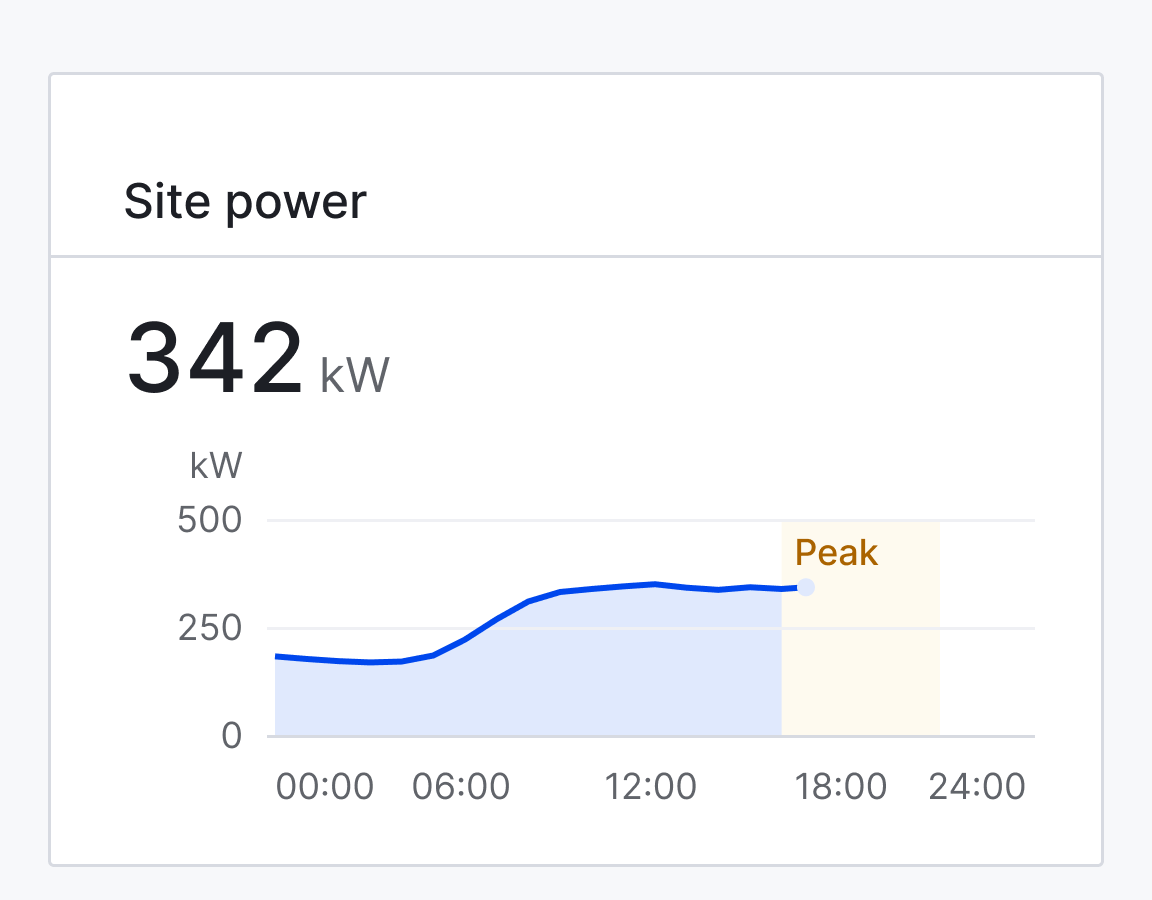
A site power tile reading 342 kW, with the day’s load curve rising through the morning and now running into the shaded evening peak window.

Console for operators

Sites, devices, alarms and energy in the browser, organized by what you manage.
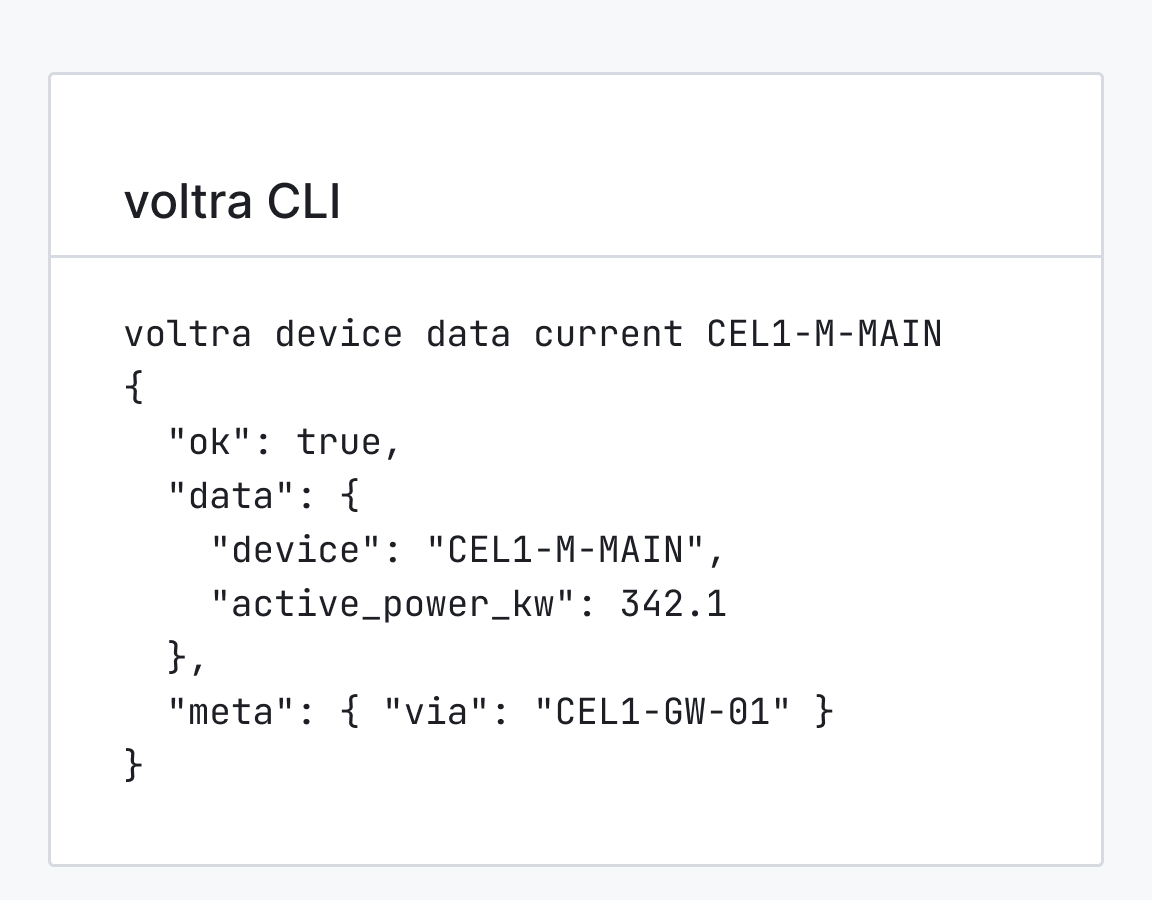
The voltra CLI reading meter CEL1-M-MAIN through gateway CEL1-GW-01 and returning JSON with 342.1 kW of active power.

CLI for developers

One voltra command for every service, with JSON output for scripts and AI agents.
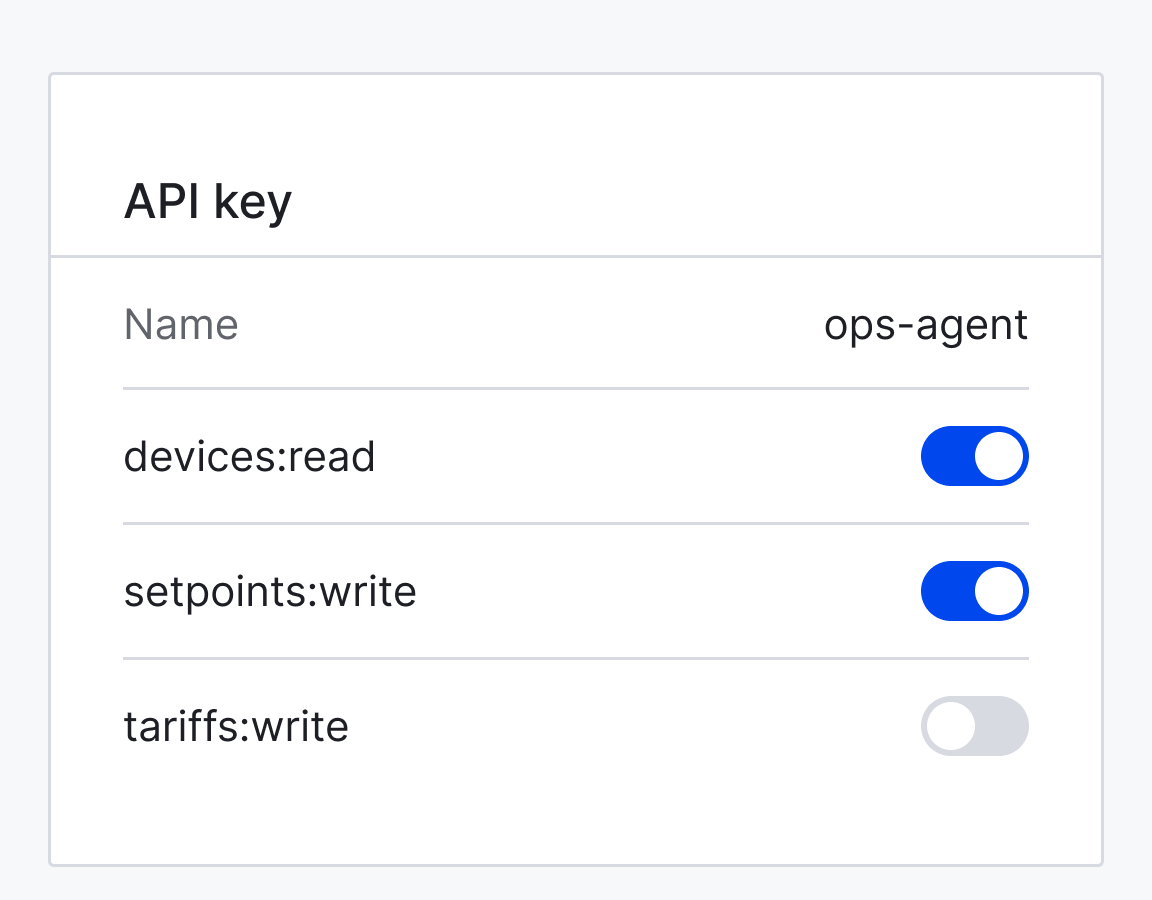
An API key named ops-agent with devices:read and setpoints:write turned on and tariffs:write turned off.

APIs and SDKs for builders

The APIs our solutions use, with OpenAPI specs and TypeScript, Python and Java SDKs.

Security in the device path.

Devices, people and services each prove who they are before Fabric acts for them.

A certificate per device

Each device enrolls with its own certificate, rotated or revoked in one step.

A proxy for outside services

Third-party services reach devices through Voltra, without opening the devices to them.

Role-based access

Access is scoped by organization and project, and checked on every request.

Audit logs

Device changes and commands are logged with who made them and when.

Encrypted in transit and at rest

From device telemetry to configuration, data is encrypted on the wire and in storage.

SOC 2 program

Our SOC 2 program covers access, change management and monitoring across the platform.

Build on the platform under every Voltra product.